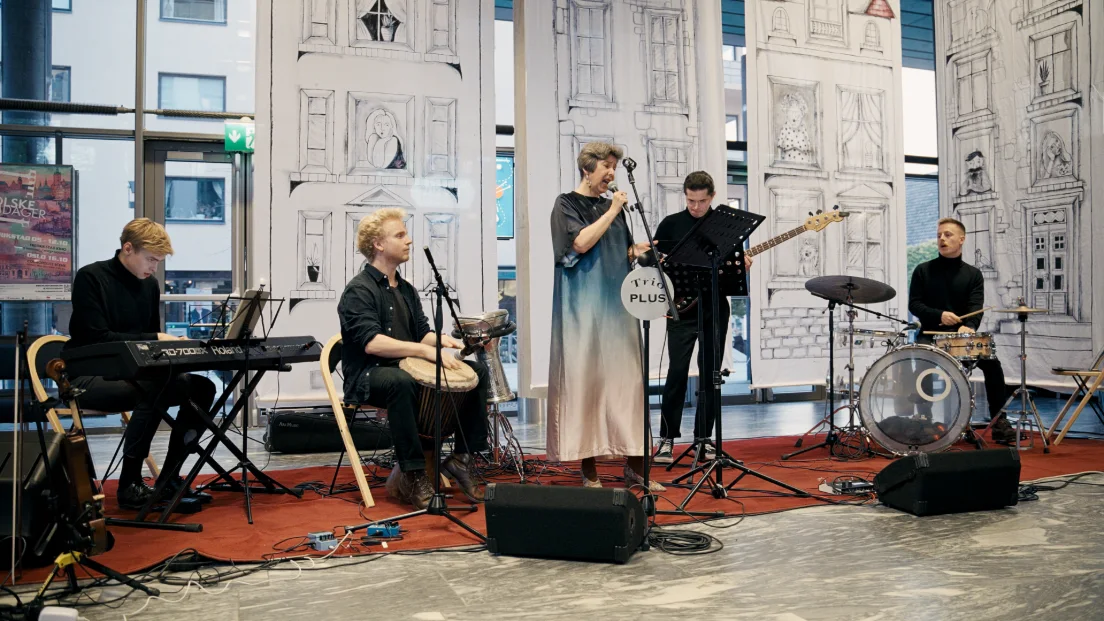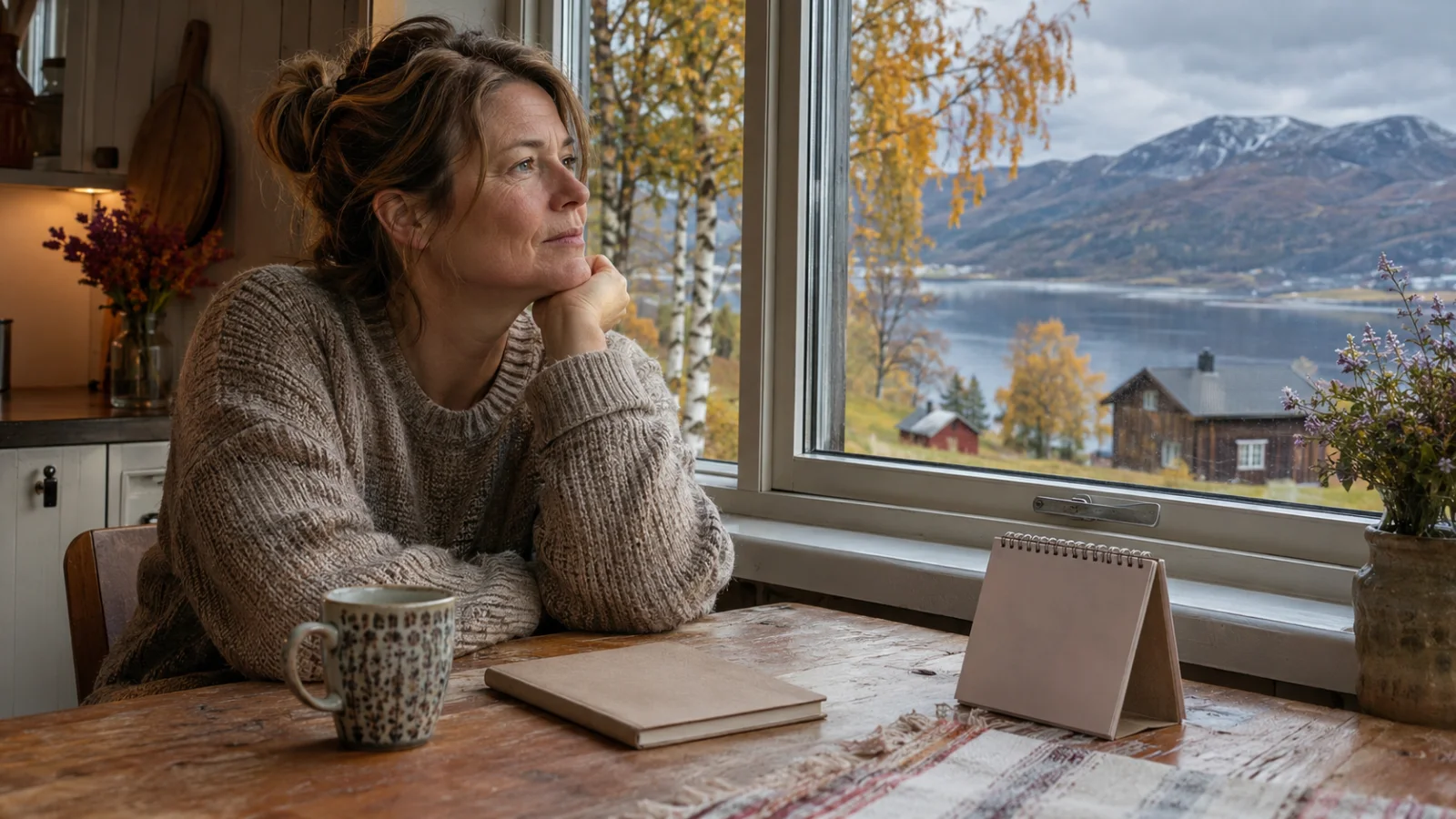
When all matters are important, our own desires easily end up at the back of the queue. In the next piece accompanying live conversations on Radio Wataha Magdalena examines how adulthood fills up with duties - and asks whether there is still room in it for ourselves.
In previous installments of the series we talked about love, closeness and difficult relationships. This time attention turns to who we are outside the role of partner, parent or employee. Below is Magdalena's personal reflection.
Do you still remember what you dreamed of when you were younger?
I'm not talking about big plans meant to change the whole world. Sometimes they were very simple dreams. We wanted to travel, learn something new, dance, sing, start our own business, live in a different place, do something that truly brought us joy. We had a lot of ideas in our heads and the conviction that so many beautiful things still lay ahead of us.
And then adult life came.
Work, bills, loans, shopping, children, home, responsibility. We began to plan not what we want to do, but what we must do. Our calendars filled with duties, and dreams slowly started to land on the list of things we will do someday.
But that "someday" can last for years.
When responsibility begins to replace life
Adulthood often teaches us responsibility, but sometimes in the process it unteaches us spontaneity, courage and listening to ourselves.
We get up in the morning, perform our duties, come back tired, take care of more matters, fall asleep and start again the next day.
And so weeks, months, and even years pass by.
At some point we may notice that our life is filled to the brim, but not necessarily with what gives us a sense of fulfillment.
We have everything planned, everything under control, we are needed by others, we meet our obligations. But when was the last time we did something solely for ourselves? Something that was not necessary, practical or profitable? Something that simply made us happy?
After all, we did not grow up to spend the rest of our lives only ticking off items on a list of duties.
Do we really not have time, or have we stopped giving ourselves the right to it?
We very often hear: "I don't have time", "I can't right now", "Maybe next year", "When the kids grow up", "When I pay off the debts", "When there is a quieter period".
Only a quieter period does not always come.
There is always something new. Another problem, another expense, another responsibility. And if we wait for the perfect moment, we may never see it.
Of course, it's not about quitting your job, leaving all responsibilities and starting to pursue dreams without thought. Adulthood requires common sense. But common sense should not mean giving up on yourself.
Sometimes a small step is enough. An hour a week devoted to something we love. Signing up for classes we've wanted to try for a long time. Starting to learn something new. Returning to a passion we once set aside.
We do not have to change our whole life at once. We can start by stopping putting ourselves off until later.
Maybe right now is the time to remind ourselves who we are beyond our roles?
I increasingly notice how important it is not to give up the things that give us a sense of being alive. That despite everyday life, responsibilities and various circumstances we should look for space for our own dreams.
In my case this also means more boldly following what I truly feel, and allowing myself to carry out things that once may have seemed distant.
And it's not that everything is easy. It's not. Sometimes we have less energy, fewer opportunities, more obligations and more reasons to tell ourselves "not now".
But I increasingly believe that we don't need perfect conditions to take the first step.
We also don't have to prove anything to anyone. We don't have to achieve success by someone else's definition. Sometimes the greatest success is simply regaining the feeling that our life also belongs to us.
And what if in a few years we regret most not what we failed to achieve, but what we gave up before we even tried?
Maybe it's worth asking ourselves a few questions today:
When was the last time I did something that truly made me happy?
Which dream have I put off for later and why?
Is my current life the life I want, or just the life I've gotten used to?
What would I do if I stopped being afraid of others' opinions and allowed myself to try?
Because dreams have no expiration date. They don't end with your thirtieth, fortieth or fiftieth birthday. We don't become too old for passion, learning, love, travel or starting something anew.
So maybe instead of telling ourselves "I don't have time" once again, it's worth asking: "Do I really want my life to look like this?".
It's not about stopping being a responsible adult. It's about not forgetting the person we are in all of this.
After all, we once had dreams. And maybe they are still within us. They've just been waiting a little too long for us to finally give them a chance.
Let's not allow our whole life to become a list of duties that we once ticked off in the hope that later we'd begin to truly live.
Or maybe that "later" is today?
Editorial comment: passions and a sense of purpose matter
Magdalena's question about finding space for herself intersects with Norwegian recommendations concerning wellbeing. In the piece "ABC for god psykisk helse" on Helsenorge Helsedirektoratet encourages three kinds of actions: activity, being with others and doing things that matter to us. Activity is understood broadly — it also includes creativity, culture, learning and volunteering. Among the suggestions are the library, a choir, learning something new and meetings with people.
Additional context is provided by a WHO Europe review on the arts, health and well-being, authored by Daisy Fancourt and Saoirse Finn, published in 2019. The report covers findings from more than 3,000 studies and points to the role of participation in the arts in promoting health, prevention and supporting treatment. However, it includes very different research methods — from case reports to randomized studies. It is not evidence that any hobby will produce the same effect for everyone.
Our editorial conclusion from these sources is that it is worth finding space for activity, relationships and things that are personally important. This does not imply an obligation to pursue great dreams or a guarantee of improved well-being.
Something important also needs to be added to the question "do we really not have time?" Sometimes there really isn't enough time. Illness, shift work, difficult financial situations or caring for loved ones limit the options. A return to oneself can begin with rest, asking for help, or dividing responsibilities. A passion should not become another task we hold ourselves accountable for failing to complete.
Magdalena's text is a personal reflection. The above sources constitute editorial supplementation; they are not a review of her text nor a confirmation of every opinion contained in it.
Let's discuss this during a live session with Magdalena
This text opens the topic of the next conversation on Radio Wataha. We want to look at the dreams we've put aside, the roles in which it's easy to lose oneself, and how to find even a little space for personal needs.
Which dream is still waiting for your "someday"? Or perhaps you have managed to return to it? Share your experience in the comments under the program announcement. Your stories may become the beginning of our conversation.
Read other articles by Magdalena
Sources of the editorial commentary
Helsenorge / Helsedirektoratet: ABC for good mental health: Do something active, together and meaningful. Update indicated on the page: 6 May 2026.
WHO Regional Office for Europe: Daisy Fancourt, Saoirse Finn, What is the evidence on the role of the arts in improving health and well-being? A scoping review. Health Evidence Network synthesis report 67, 2019.
Access to sources: 3 November 2026.