"We're just joking." And you're increasingly afraid of going to work
It starts with a jab in front of others. Then someone again comments on your accent, leaves you out when passing on information or undermines what you do. When you protest, you hear: "You don't have a sense of humor." You begin to wonder whether something bad is really happening or whether you are overreacting.
This is an example illustrating the problem, not a description of a specific company. Similar situations require examining the facts: what is happening, how often, in what context and with what consequences.
Not every difficult situation at work is mobbing. However, you do not have to wait for certainty that it is mobbing in order to report degrading behavior or seek support.
This guide opens the topic with a conversation with Anna Willder, TN expert psychologist. In it we separate legal definitions, research findings and tools to help organize your own experiences.
What is mobbing according to the Norwegian definition?
According to Arbeidstilsynet, mobbing is a situation in which one person systematically experiences negative actions from one or several persons: the actions recur over a period of time, and the affected person finds it difficult to defend themselves against them.
This definition combines four elements:
Negative actions - directed at the person or hindering their work situation.
Repetition and duration over time - it concerns a process, not merely a single dispute.
Systematic nature - successive incidents form a pattern of treatment.
Difficulty in defending oneself - the relationship does not allow the situation to be effectively stopped.
The advantage does not have to stem from a managerial role. It can be linked to group support, control of information or influence over work allocation. Such an imbalance is also described by the Norwegian institute of occupational medicine STAMI.
There is no rule here that you must wait six months before reporting. Periods used in research questionnaires are not an instruction for how much abusive behavior an employee must endure.
Mobbing, harassment, molestation and conflict - different concepts
In Norway, broader legal protection against harassment, that is bullying or behavior that violates dignity, is of key legal importance. Mobbing is one of its forms.
Term What does it mean in practice?
Mobbing - Repeated, systematic negative actions over time and difficulty in defending oneself.
Harassment - Actions, omissions or utterances whose aim or effect is, among other things, intimidation, humiliation or degradation. A single sufficiently serious incident can also meet this definition.
Sexual harassment - Unwanted attention of a sexual nature, having a harmful aim or effect specified in the regulations.
Other improper conduct - Other inappropriate behavior that the law also protects against.
Conflict - A dispute in which the parties have a relatively equal opportunity to present their positions and defend themselves. However, it can develop into harassment.
Definitions and their distinction are described by Arbeidstilsynet - harassment and Arbeidstilsynet - bullying.
Lack of grounds to label a situation as bullying does not automatically mean that the behaviour is permitted or harmless to health.
What do Norwegian regulations say? Basis in Lovdata
Arbeidsmiljøloven § 4-3 concerns the psychosocial working environment. It protects the integrity and dignity of the employee and prohibits harassment, including sexual harassment, and other improper conduct. It also takes into account work organisation, conflicting demands, excessive time pressure and the availability of assistance.
The statutory wording purpose or effect is significant. The explanation "I did not mean to offend anyone" does not close the assessment of the incident. At the same time, the mere feeling of distress does not determine a violation: the behaviour, its context and severity must be examined.
Rules on reporting irregularities are contained in chapter 2 A of the arbeidsmiljøloven, including the duty to investigate a report and the prohibition of retaliation. In cases of harassment related to, for example, sex or origin, § 13 of the Equality and Anti-Discrimination Act is also relevant.
The current text of the arbeidsmiljøloven is also available on the Arbeidstilsynet website.
What can bullying look like? Notice the pattern, not just a single sentence
Norwegian psychologists and researchers Ståle Einarsen, Lars Glasø and Morten Birkeland Nielsen describe direct and indirect actions affecting the person or their work. Their review of research in Tidsskrift for Norsk psykologforening helps to understand why the entire course of events matters.
Examples to analyse:
Undermining the person: repeated name-calling, humiliating comments, mocking someone's accent.
Isolation: being left out of necessary communication and gradual exclusion from the team.
Obstructing work: not providing information, and then blaming for a foreseeable mistake.
Discrediting: attributing incompetence without referring to facts or opportunities to improve.
Double standards: different treatment of comparable situations without a factual explanation.
The mere presence of a single element does not constitute a diagnosis. A mistaken message sent in error and the systematic cutting off of one person from information require a different assessment.
Can humiliation turned into a joke be mobbing?
Yes - if repeated "jokes" create a pattern of harmful treatment and it is difficult to defend against them. Regardless, they can be harassment. Arbeidstilsynet explicitly lists hurtful jokes and teasing among its possible manifestations.
In an example situation a colleague regularly imitates your pronunciation. After asking them to stop you hear in front of others: "He's offended again." It is worth describing both parts of the incident - the comment and the response to the boundary set.
Helpful questions:
Are we laughing together, or is the group laughing at the expense of one person?
Can I refuse to participate without further humiliation?
Does the behavior recur despite noticeable discomfort or opposition?
Do the comments undermine my position in front of others?
You do not have to prove that the perpetrator lacks a sense of humor. Describe specific words, circumstances and consequences. A smile, silence or an attempt to defuse the tension should not automatically be considered consent.
Source: Arbeidstilsynet - harassment.
When can a situation be difficult but not be mobbing?
A fair assessment also takes other explanations into account. This is not about undermining your feelings, but about properly identifying the problem and choosing the right response.
Illustrative situation
What needs to be checked? A manager points out a mistake and asks for a correction. Does the manager talk about the task, present the reasons and give an opportunity to explain? You don't receive a promotion. What were the criteria and were they applied fairly? You are not invited to one meeting. Did it concern your tasks? Was it an oversight, or part of a recurring exclusion? The schedule or scope of duties changes. Is there an organizational justification and is the change in accordance with employment rules? There is a sharp exchange of words. Was it a dispute between parties with similar ability to defend themselves, or an entrenched dominance and humiliation?
Unpleasant information can be justified. A real employee error, however, does not give permission for public humiliation. Separate the content of the remark, the manner of delivery and the history of treatment.
STAMI points out that some indirect behaviors are initially difficult to distinguish from an isolated incident. Therefore it is useful to collect concrete observations, rather than immediately deciding on other people's intentions.
Women and men - the same right to protection
There is no rule that a woman should be "less emotional", or that a man must endure humiliation. Gender does not justify harmful treatment.
Examples that require looking at the context:
towards a woman: undermining competence through comments about appearance, motherhood or stereotypically assigned emotions;
towards a man: ridiculing the need for help, being ill or childcare with the slogan "a real man doesn't complain";
towards any person: isolation, intimidation, sexual remarks or pressure to tolerate behavior they do not want.
These are editorial examples, not a statistical division of behaviors by gender. Women and men can both experience harassment and perpetrate it.
Arbeidstilsynet points to women, young people and temporarily employed persons as groups at increased risk of sexual harassment. It can take verbal, physical or non-verbal forms; a single sufficiently serious case may be enough.
Meanwhile a study described by STAMI shows that the mere feeling of being able to defend oneself is not a universal protection against further bullying. So let us not shift responsibility onto the person who "should have responded more strongly".
Provoking a reaction: when only your outburst becomes visible
Imagine a series of small snide remarks. After another one someone raises their voice. From that moment the conversation concerns only their reaction, and the earlier incidents disappear from the account.
Such a situation requires checking the whole sequence. The outburst alone does not prove that someone intentionally provoked beforehand. Nor does it rule out the possibility that bullying occurred before the outburst.
Prepare two separate pieces of information:
What preceded my reaction? Dates, words, actions and people present.
How did I react? What I said, what I did and what needs clarifying.
Instead of "they wanted to drive me crazy" write: "After the third comment about my nationality I said in a raised voice that they should stop". This is an example of a way to note things down, not a resolution of a specific case.
There is no need to diagnose a colleague as a "narcissist" or to attribute hidden intentions to them. Behaviors and context are needed to investigate a report.
Feelings and health: signals you should not ignore
STAMI/NOA links experiences of bullying with an increased risk of anxiety symptoms, depressive symptoms, sleep disorders and longer sickness absence.
Pay attention to whether the following appear before work, after contact with certain people, or after work messages:
tension and fear before the next meeting;
difficulty sleeping or concentrating;
persistent overanalyzing of conversations;
withdrawal, a sense of shame or loss of trust in one's own judgement;
deterioration in daily functioning.
This is a list for a conversation about health, not a test that confirms bullying. Similar ailments may also have other causes. Their absence does not prove that nothing bad is happening at work.
If your health worsens, seek help in parallel with clarifying the work situation. Helsenorge emphasizes the importance of work organisation and support in preventing stress.
A tool for recognizing the situation: six questions instead of an online diagnosis
In psychological research, tools describing specific negative behaviors are used, e.g. Negative Acts Questionnaire - NAQ. The following questions are an editorial aid to prepare a conversation; they are not a copy of the NAQ nor a validated test.
What exactly is happening? Write down words or actions instead of the label "bullying".
Does the behavior recur? Note dates and connections between incidents.
Is there an objective explanation? Separate job-related demands from a humiliating form.
What options do I have to defend myself? Can I explain the situation and safely seek help?
What happens after pointing it out? Does the behavior stop, or is there further humiliation?
What are the effects on work and health? What has changed and since when?
Do not total the answers to reach a "you are being bullied" result. Take your notes to a supporter, a trade union, your employer or a specialist.
When to act? You don't have to wait until you become ill
At the first worrying incident: write it down and consider whether you can safely clarify the situation. If you want, set a simple boundary: "I do not want comments about my background. Let's talk about the task".
When the behavior recurs or is serious: seek support and report the specific problem. Direct confrontation is not a requirement for obtaining protection. If the perpetrator may be a manager, choose another appropriate channel.
When threats, violence, harassment or a clear deterioration of health occur: do not postpone seeking help until you have gathered a "sufficient number" of incidents.
Arbeidstilsynet describes how you can report. A report does not have to be written in legal language.
How to document incidents?
Keep a short, factual log. Separate facts, your own interpretation and consequences. Keep documents to which you have legal access; do not take other people's data or confidential materials unrelated to the case.
What to write down?
Illustrative example:
Date, place, channel: 15 October, team briefing.
Words or action: A comment about my accent was repeated; then I did not receive the instructions given to the rest of the team.
People present: Names and positions of people present, without assuming what they will confirm.
My reaction: I asked them to stop the comments and to send the instructions.
Trace: Message regarding the instructions; a note made after the meeting.
Outcome: I could not start the task without the information; I reported it to the manager.
Do not publish accusations on social media instead of using the proper reporting channel. The collected information is meant to help clarify the matter.
Where to report the problem and what to expect?
Person or institution — what can they help with?
Employer, appropriate supervisor, designated reporting channel Investigate the matter and implement measures to ensure a safe working environment. If the report concerns the immediate manager, use a different appropriate level.
Tillitsvalgt / trade union Support for the employee and assistance in preparing further actions.
Verneombud Support on workplace environment issues; this role should not automatically be equated with a personal representative of one party.
Bedriftshelsetjeneste - BHT Assistance with health and working conditions issues if the company uses such a service.
Arbeidstilsynet Guidance and supervision of compliance with workplace environment requirements; it does not replace your lawyer and does not award compensation on your behalf.
GP and psychologist Health assessment, support and treatment; they do not replace the company's investigative procedure.
LDO, Diskrimineringsnemnda, lawyer Selection of the pathway in a case of discrimination or retaliation and assessment of the scope of competence of the appropriate authority. Not every bullying case is subject to the nemnd.
The roles of the participants are explained by Arbeidstilsynet. In a dispute over dismissal or termination, quickly consult with the trade union or a lawyer — short deadlines may apply.
Short template for the initial report
“I report behaviours that raise my concerns about a safe working environment. On the days […] the following occurred […]. Present were […]. The behaviours are repeated / the incident was serious because […]. Please confirm receipt of the report, investigate the matter and inform me about the next steps and measures to protect me from any deterioration in my situation. I also request the possibility of a supporting person taking part in the meeting.”
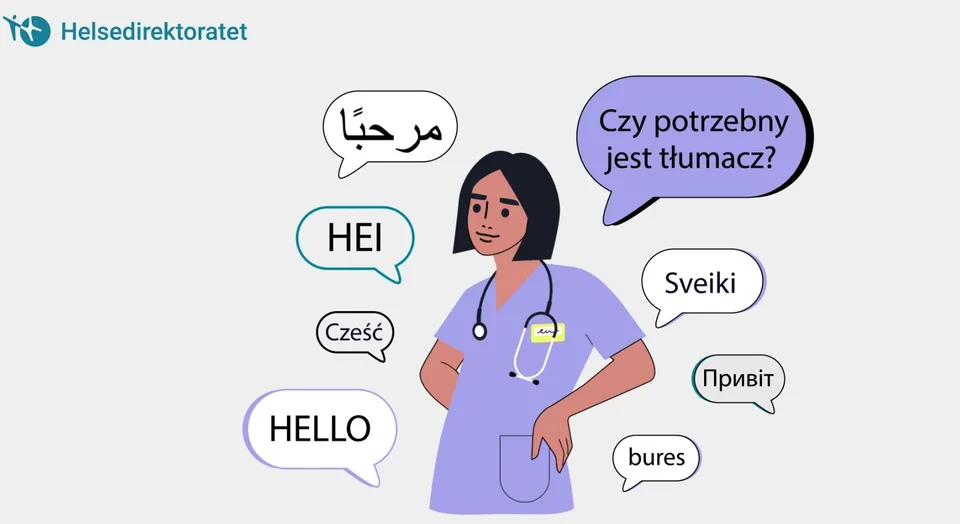
This is an editorial template to adapt, not a guarantee of a particular outcome of the procedure. If there is a language barrier, ask for a written summary and help to ensure that the content corresponds to your experiences.
What should the employer do? What about retaliation?
The employer should investigate the report within a reasonable time and ensure the safety of the people involved. This includes the opportunity for the person the allegations concern to present their position. The report itself does not determine their guilt.
Impartiality, fact-finding and appropriate measures are needed. When the allegations concern a manager, care must be taken in how the case is handled so as not to undermine the integrity of its investigation. The rules are described by Arbeidstilsynet - procedure after a report.
Retaliation may include negative actions related to the report, for example threats, exclusion or unjustified deterioration of conditions. Not every subsequent employer decision is retaliation — its grounds are also subject to assessment. Document what changed after the report. Arbeidstilsynet points to Diskrimineringsnemnda as a possible route in retaliation cases; the scope of competence must be checked, especially in cases of dismissal or termination.
What a psychologist can do, and what they do not decide?
A psychologist can help to put experiences in order, assess mental condition, work on symptoms and prepare for difficult conversations. You do not need legal confirmation of mobbing to use the help.
The Norwegian Norwegian Directorate of Health emphasizes that the treating clinician often knows only one side of the story. Therefore they should not on that basis determine toward the employer that mobbing actually took place. They can, however, describe the patient’s health, symptoms and functioning. The occupational matter must be clarified in parallel.
Studies discussed in Tidsskrift for Norsk psykologforening point to the importance of treating symptoms of anxiety and depression with consideration of the work situation. Assistance should not be reduced to telling the employee to simply get used to harmful conditions.
A qualified person decides on any incapacity to work and on sick leave based on the state of health. The occupational conflict alone does not automatically give the right to sick leave. The title of psychologist alone does not in Norway confer the authority to issue a sickness certificate; NAV sets out the rules.
Is the approach similar in Poland?
The goal is similar: protecting the employee from persistent harmful treatment. However, the legal constructions differ. Poland has a separate definition of mobbing in the Labour Code, while Norway uses broad protection against harassment and a requirement for a safe working environment. So do not automatically transfer Polish criteria to a Norwegian case.
Important date: according to a statement by the Polish PIP, from 5 November 2026 regulations concerning mobbing in Poland are changing. This material was prepared on 15 October 2026; cases in Poland should be assessed according to the applicable legal state.
We will ask Anna Willder about this
In the interview with the Twoja Norwegia psychologist expert we primarily want to expand on the following questions:
How can I recognize that I am beginning to justify harmful behaviours?
How to distinguish your own fear from an observable pattern of treatment, without invalidating emotions?
What to do when stress makes it difficult to calmly recount the events?
How to support a person being harassed without urging them into a risky confrontation?
What signs indicate that rapid psychological or medical help is needed?
Anna Willder runs the Psykohjelp practice. According to the provided professional description she has worked, among others, in mental health care, PPT, BUP and addiction treatment; the scope of her assistance also includes stress and burnout. In the TN series she will bring a psychological perspective. Her contribution does not replace an individual legal assessment.
You do not have to resolve the entire matter by yourself
You may not know whether the appropriate word is "mobbing", "harassment" or "conflict". You can still say: "This is happening, it affects my work in this way and I need someone to investigate it."
Start with specifics, support and taking care of health. Naming the problem should not be a precondition for treating it seriously.
Educational material does not replace individual legal advice or a health consultation. In cases of immediate danger to life or health call 113, and for a threat requiring urgent police intervention - 112.