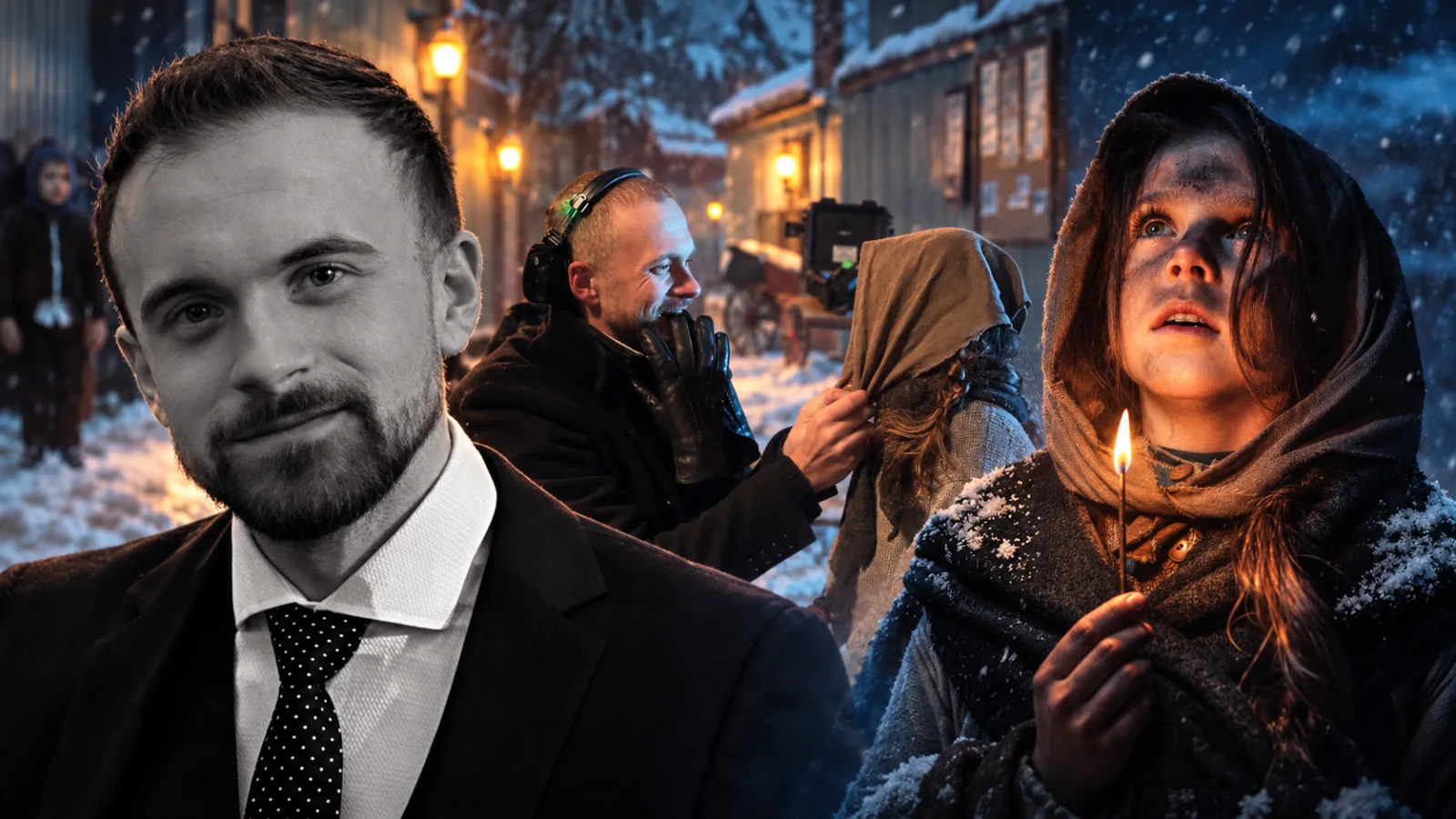
From the series "What Poles do in Norway"
At first there were supposed to be guitars, albums and concert tours. Filip Jezowski imagined life on the road, performances with a band and music that reaches people around the world. Today he works on films and series watched by an international audience. His name appears among the crews of "Troll 2", "Sentimental Value", "Number 24" and "Succession". At the same time he creates his own cinema.
In an interview with Radio Wataha he talks about growing up between a Polish home and a Norwegian environment, the costs of pursuing dreams and work in which long days are often accompanied by short nights. He also returns to the story of a little boy who came to a new country and had to learn to understand it.
He found that memory years later in the fairy tale about the little match girl.
From Masuria to Norway. The beginning of the journey
Filip comes from the area around Kętrzyn in Masuria. He came to Norway with his parents as a small child, around the turn of 2004 and 2005. The exact date has faded from memory. What remained was the experience of moving to a place where everything had to be learned from the beginning.
The new country meant a new language and a new environment. According to his parents' recollections he learned Norwegian lightning-fast — after about two months he was able to communicate comfortably.
Openness helped him. He easily made acquaintances, found friends and fitted in among people. He only began to notice the differences between the Polish home and the Norwegian surroundings more strongly as a teenager.
He recalls rules, duties and set times for returning home. For some of his friends it looked different. The financial capabilities of families and access to the things young people dreamed of also differed.
- My parents gave me what they could, and I made the most of it, says Filip.
Looking at that time from today's perspective, he appreciates his parents' effort. He believes that having to work for many things helped him understand their value.
He makes it clear that he is not telling a story of discrimination. He speaks about his own upbringing and experiences that shaped his approach to life. He knows how much he owes his family, and he took that awareness with him into adulthood.
Before the camera appeared, there was heavy metal
Filip's first great passion was music. Rock and heavy metal occupied much more space in his life than thoughts about a career as a director.
He was interested in composing, producing and mixing recordings. He tried to form a band. Like many teenagers in love with heavy sounds, he imagined concerts, albums and world tours.
Avenged Sevenfold had particular significance for him. He was fascinated by how the musicians compose, combine different inspirations and build their own style. Over time he began to see that he was looking for similar freedom and courage in telling film stories.
- That was my first great love: heavy metal music — he recalls.
Film had accompanied him earlier. He recorded short scenes, sometimes alone, sometimes with his sister or friends. Watching successive productions, he was interested in what was happening off-camera.
Who works on a set? How are duties divided? What has to happen for an idea to turn into a scene, and scenes into a finished film?
Curiosity grew stronger and stronger. Eventually he sent an application to the private school NSKI in Oslo, where he began studying directing.
Eighteen years old, moving out and investing in himself
When he moved out of his parents' home, he was about eighteen and a half years old. There was little money in his account, and ahead of him were tuition fees and the costs of living independently.
He financed his studies, among other things, with a student loan. The budget required careful attention, but the goal was clear: to learn how to make films.
- Everything went into studying. Into learning how films are made -- he recounts.
At university he quickly realized he had found a field that truly absorbed him. He began making his own short productions and testing how his ideas worked on screen.
The first official short film, he recalls, was made in 2021 and was related to boxing. Another important step was the thriller „Falkeredet”, prepared in connection with completing his bachelor's degree. His body of work also includes „Sluttspillet”, known as „Endgame”.
His own projects gave him the opportunity to make decisions: working on the story, directing actors and finding the right tone. They also taught responsibility. When you are the director, you have to bring the idea to fruition and face what was actually achieved.
Professional film sets would soon show him another side of this work.
What did he do on „Troll 2”, „Sentimental Value” and „Number 24”?
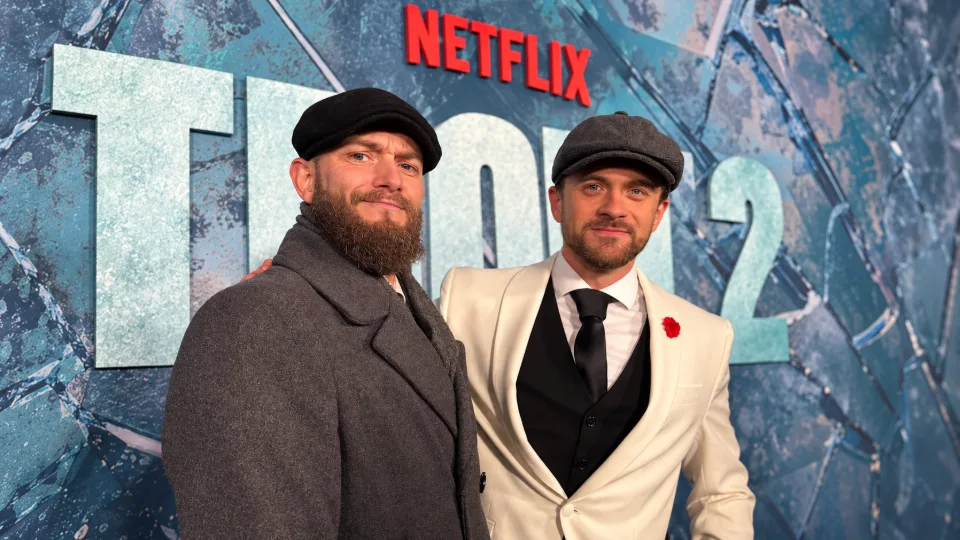
The names of big productions attract attention, but it is the specific duties that show what Filip's path looked like.
On „Troll 2”, „Sentimental Value” and „Number 24” he worked in set design and props. He thus helped create the world the viewer sees on screen - the space prepared so that it could become part of the story being told.
Behind a believable interior and the objects present in a scene stand the decisions, preparations and work of many people. Every element must fit the film, and the crew must have it ready before filming.
The tasks were different on „Succession”. There Filip worked in administration, supporting the production coordinator. He recalls delivering needed items to the set, finding accommodation and organizing routes.
He points to this experience as particularly demanding. Organizing production means reacting to changes, anticipating needs and overseeing matters that others' work depends on.
In the interview he also mentions „There’s Something in the Barn” and „Gulltransporten”, known to Polish audiences as „Race for Gold”. He also talks about supporting the assistant director's work in organizing the set.
On big productions he gains experience as a crew member. On his own films he is responsible for directing. He develops these two paths in parallel, and knowledge from one helps him in the other.
- The days are long, the nights short, but I love this job. I wouldn't trade it for anything - he emphasizes.
The film set as a baptism of fire
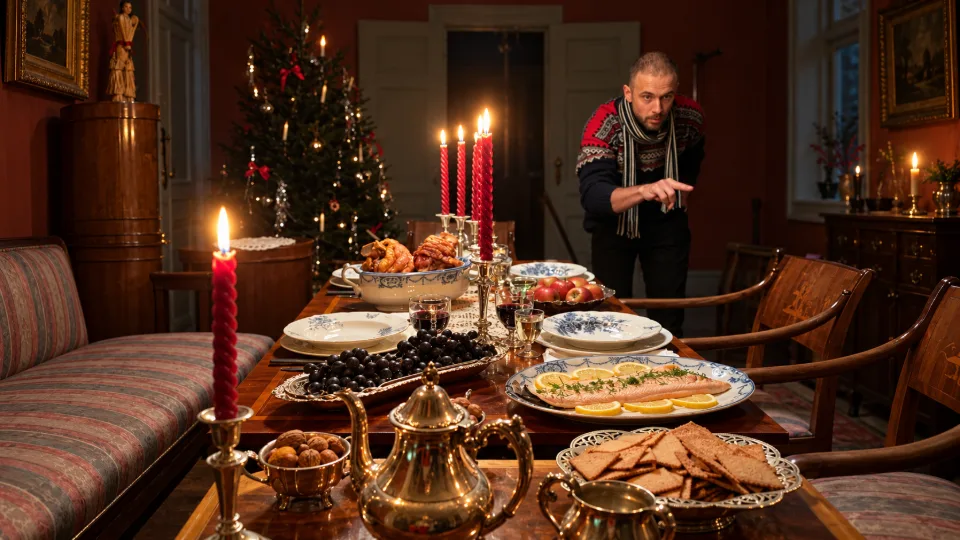
Filip watches the work of the people around him. He observes directors, producers, those organizing the shoots and the heads of the various departments.
He is interested in how they make decisions. What do they do when a problem arises? How do they talk to the crew? What do they give up, and what do they fight for to the end?
- On two professional productions I learned ten times more than during three years of studies - he says.
This is his personal measure of the intensity of practical learning. He calls the film set a baptism of fire: a place where knowledge must be used immediately and decisions have consequences for the entire team.
Such experience later helps him with his own projects. He understands better what individual departments need and how much work goes into realizing the director's idea.
A special place in his body of work is his participation in the making of Joachim Trier's „Sentimental Value”. For Filip, working on such productions is an opportunity to learn from experienced creators and to learn the standards he wants to apply in his own cinema.
„The Little Match Girl” and the memory of a new country
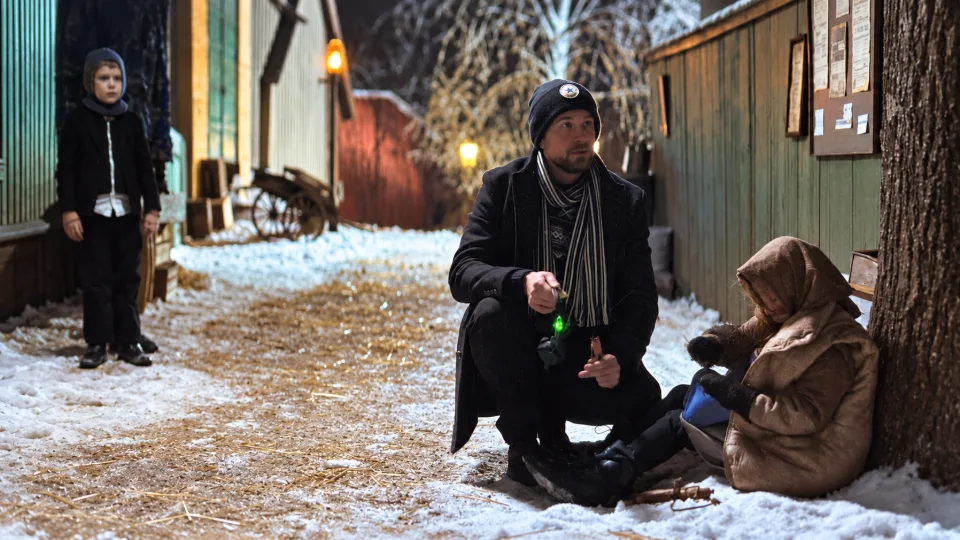
His latest film is titled „Fyrstikkpiken”. It is a short film adaptation of Hans Christian Andersen's „The Little Match Girl”.
Initially the choice of the story also had a practical justification. Filip was looking for a tale that could be credibly realized on the available budget. Other fairy tales would have required much greater expenditures on effects and on preparing the film world.
However, while working on the script he began to find personal emotions in this story.
He recalled his arrival in Norway. To a time when he did not yet know the language, and the surroundings were foreign.
- I didn't know anyone, I didn't know the language. I had my parents and myself - he says.
In the heroine's fate he recognized the feeling of loneliness. The memory of the first moments in a new country helped him think about a child who is trying to find themselves in a world bigger and more difficult than they can understand.
This story leaves room both for his memories of quickly making friends and for moments of being lost. A child can be open and curious about people, and at the same time feel lonely when they still cannot tell them what they need.
It was precisely this trace of his own experience that he brought to the interpretation of the well-known fairy tale.
Martyna Slema in the leading role
The title character is played by Martyna Slema, a young Polish woman. On the film poster next to her name are Pia Borgli, Jeppe Beck Laursen, William Gundersen and Nikoline Bangen.
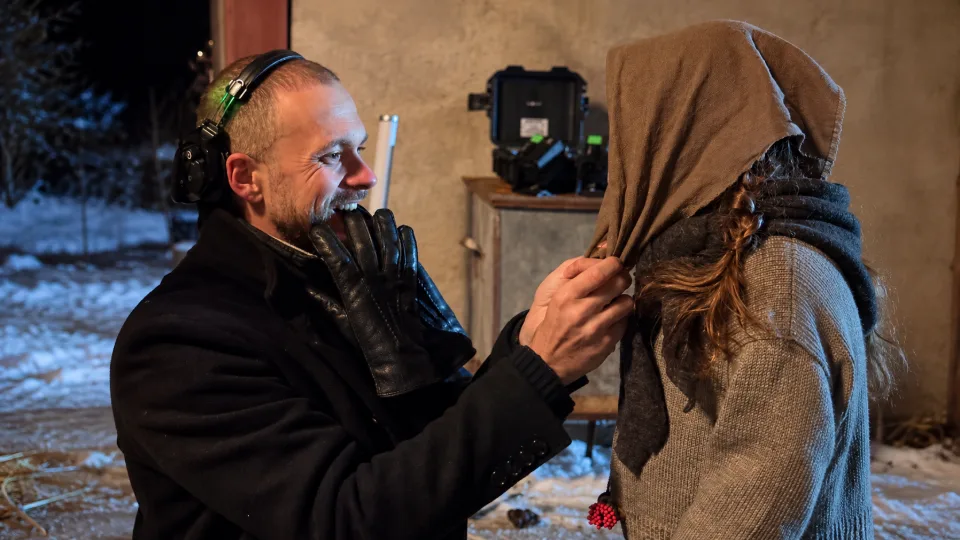
Filip recalls the sight of the young actress in a winter setting, in costume and surrounded by the crew. Her parents were present on site, although during the takes they remained outside her immediate field of vision.
This situation evoked his own memories: a child in a new environment, among people and rules that must still be learned.
Martyna's story on set and Filip's experience met in the work on the character. The director sought an emotion that would allow the viewer to see a living child in the heroine, to feel her disorientation and need for closeness.
For Polish audiences the film therefore also has an additional dimension: behind the camera stands a Polish director living in Norway, and in front of it a young Polish actress.
One phone call can open doors
How do you gather a crew for your own short film when you have limited funds?
Filip talks about contacts gained during his work, but also about the readiness to take the first step. You have to present the idea, invite collaboration and accept that the answer may be „no”.
Among those involved in „Fyrstikkpiken” is Jeppe Beck Laursen, known to viewers of „The Last Kingdom” for the role of Haesten. In the interview Filip also talks about the participation of Eikki Toppinen from Apocalyptica.
For a man who began with a fascination for heavy metal, collaborating on a film with a musician from that band has special significance. The music that started it all returns in his professional life.
Filip approaches inviting people to the project simply: it’s worth trying. A refusal closes a concrete opportunity, but not getting a phone call leaves a question to which one will never know the answer.
This approach recurs throughout his story. Sending an application to school, entering the industry, starting his own film and talking with an experienced creator require a similar decision - you have to speak up and show what you want to do.
Ten minutes of film, months of work and his own money
„Fyrstikkpiken” is to last about ten minutes. Behind this short screen time are preparations, shooting, post-production and expenses that for an independent creator carry very concrete weight.
Filip initially assumed a budget of about 50 thousand kroner. As he says, after taking into account further costs, also related to distribution, the estimated total approached 130 thousand kroner.
He put a significant portion of the money into the project out of his own pocket. He also mentions support from his father.
These savings were turned into the possibility of realizing his own story and showing his directing skills. Every spending decision influenced what could ultimately appear on screen.
During the conversation about budgets, Filip returns to the script.
- I treat the script like a bible - he says.
Only the story allows the production needs to be defined: the number of actors, locations, equipment, costumes, props and effects. The runtime alone says little about how much it will cost.
Ten minutes of an intimate conversation require different means than ten minutes of a story unfolding in many places, with elaborate set design and effects.
The amounts given by Filip describe his own project and the conditions in which he managed to organize it.
Artificial intelligence as part of the toolkit
AI also comes up in the conversation. Filip views it through the experience of his work and his own budget.
He treats artificial intelligence as a tool that can help carry out some tasks. At the same time he notices questions about employment and the economic consequences of changes in the industry.
He recalls working on a project for audiences in India in which AI was used. As he emphasizes, obtaining the right result still required time, trials and oversight. Simply entering a prompt did not mean a finished effect.
He also used such solutions for some of the effects in „The Little Match Girl”.
By his estimates, producing those elements by traditional methods would have consumed a significant portion of the budget. He estimates the cost of solutions using AI at about 5 thousand kroner.
For an independent director, it was a decision about how to realize a specific idea with limited resources. You still had to write the script, assemble the crew, direct the actors, shoot the material and assess whether the individual elements fit the film.
Filip does not expect the need to create cinema with people in front of and behind the camera to disappear. In his approach, new tools become part of the process for whose result the creator is responsible.
First a screening in Oslo. Maybe Marvel someday
At the time of the interview Filip is still working on finishing "Fyrstikkpiken". He announces a closed premiere screening on November 28 at Vega Scene in Oslo.
Later he would like to show the film to a wider audience. He is considering making it available on YouTube and talking with NRK about the possibility of broadcasting it during the holiday season. He describes these ideas as the next steps he wants to take.
And when we ask about his biggest professional dream, Marvel and DC come up.
He would like to work on large-scale cinema. He does not point to a specific superhero or a ready-made story. He is attracted by the possibilities of such productions and the challenges they pose to a director.
He is also open to working in Poland if a project arises to which he can contribute something valuable.
His ambitions are accompanied by patience.
- There's a time for everything. You have to be patient, he says.
A Polish filmmaker builds his place in Norwegian cinema
Filip's story does not have a single event that explains his entire journey. There is the move with his parents, a fascination with music, leaving to study, first films and further responsibilities on professional crews.
There is also money saved for his own project and phone calls to people he wanted to invite to collaborate.
His experience shows one of many ways in which Poles take part in life in Norway. They also work in culture and in stories that later reach audiences far beyond the country's borders.
Filip gets to know big cinema from the inside while at the same time looking for his own voice. In "Fyrstikkpiken" he combines professional craft with an emotion remembered from childhood.
A boy from Masuria, who once had to learn to understand a new country, now prepares a story for a cinema audience. A match lights in his heroine's hand. Behind that image are years of learning, work, and the decision to try.
Based on an interview by Radio Wataha with Filip Jezowski and the poster of the film "Fyrstikkpiken". Quotes have been edited for readability
Filmmaker's body of work: Filip Jezowski on IMDb.