Poles in Norway have many stories to tell. We show what we do while emigrating, how we arrange our lives, develop passions and help others. We want to get to know people, their everyday life, successes and difficulties they have faced. Today we meet Agata Klingenberg and her path to Reiki. And if you also have a story you want to share - get in touch with me. Steve Joobs, Twoja Norwegia.
Agata
We do not start with certificates hanging on the wall. We start with the memory of a little girl who - as Agata Klingenberg recounts today - saw herself placing her hands on other people. She was then five or six years old. She did not know the word "Reiki" and did not know that years later she would connect her interests with this practice.
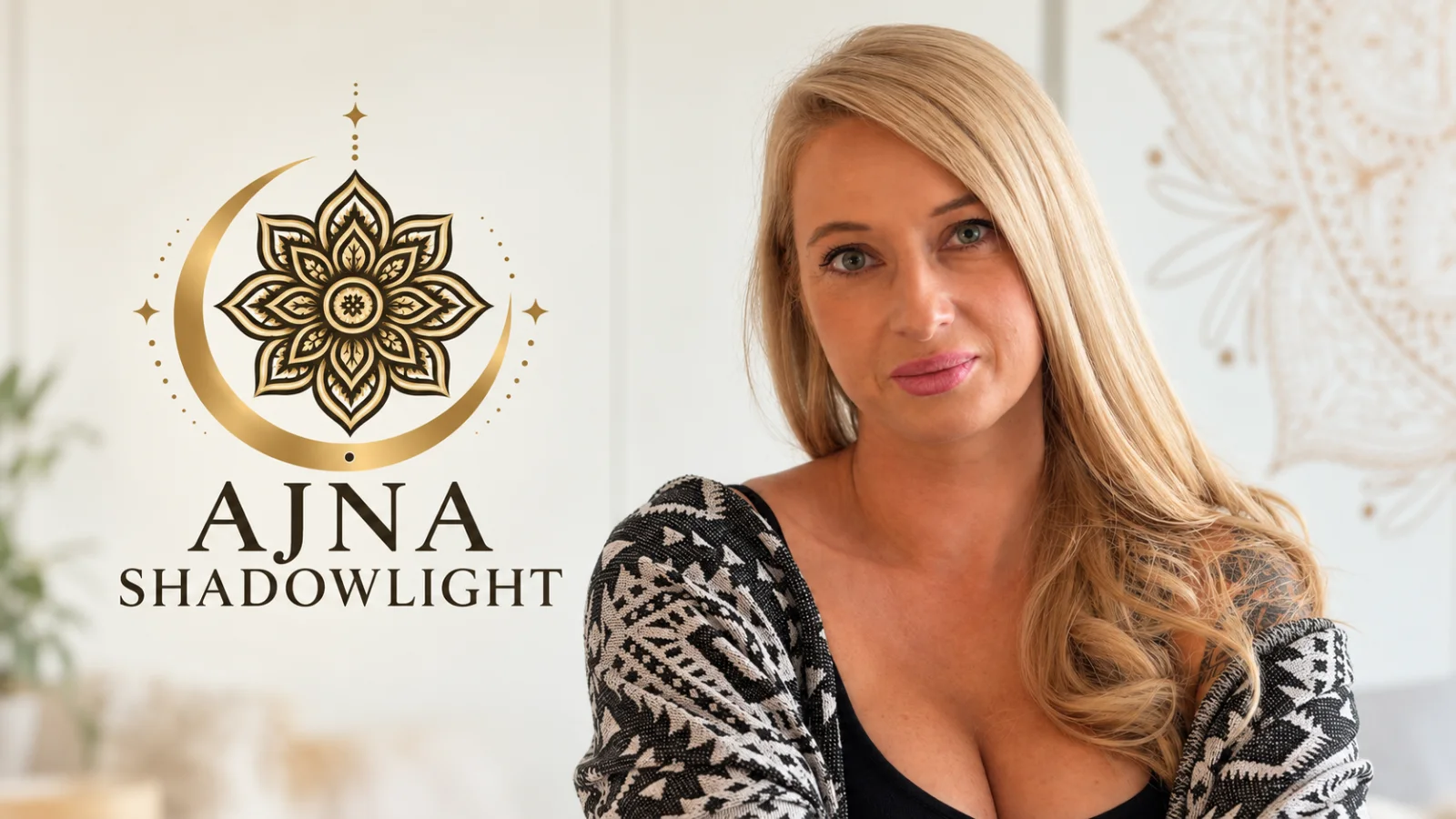
Today under the name AJNA Shadowlight she creates a space whose motto is "Mer harmoni i hverdagen" - more harmony in everyday life. Behind these words are her personal experiences, spiritual beliefs and the work with people who come to sessions.
In a conversation for Twoja Norwegia we ask what actually happens during such a meeting, how she acquired knowledge and whether one can cross the threshold of her office, remaining skeptical.
A memory that gained significance over the years
Agata describes the childhood experience as a vision. This is her present interpretation of a memory that she connects with her later path.
- Reiki actually appeared in my life when I was still a child, when I was five–six years old and when I still did not know that it was Reiki - she says.
Conscious interest came in adulthood. As she emphasizes, it was not accompanied by a long process of convincing herself.
- It was as if I had been struck by lightning. As if I immediately knew that this was something I wanted to pursue. I had absolutely no doubts.
Asked how she would explain her practice to someone who hears its name for the first time, she answers in the language of energy, harmony and returning to oneself. She understands Reiki as a "universal energy" with which - according to her beliefs - she works during sessions.
The most important in her description are the needs of the specific person: sometimes the search for calm, sometimes the ordering of emotions, and sometimes the feeling of greater readiness to act.
What happens during the first meeting?
The first step is a conversation. Agata asks what the client comes with and what they need. Only later does the session itself begin.
- The more the client tells me, the better technique I will be able to select to work with them - she explains.
As she describes, the participant lies down on a massage table. They can set their own intention for the meeting. Then Agata moves her hands over the body and uses a pendulum - she interprets these actions as recognizing so-called energetic blockages.
In her practice there are also stones placed in sites referred to in this tradition as chakras, sage, sounds and oils. She works by placing her hands on selected spots or holding them above the body. She emphasizes that she avoids intimate areas.
The meeting ends with a guided visualization or meditation, and then a conversation about the participant's sensations and possible subsequent meetings.
Is there room in this ordered sequence for a question, a change of mind, or a break?
- At any moment when the client feels that they want to say something, need to say something or ask something, they can absolutely ask, interrupt, speak - she replies.
This is an important detail for someone coming for the first time: the participant can communicate their boundaries and end their participation.
And what if someone doesn't feel anything?
Reiki sessions are often described through intense experiences. In this conversation, however, the question of the opposite situation also arises: what if nothing special happens?
Agata admits that such meetings also occur.
- I react the same way as when someone feels something - she says.
She explains that she then talks with the participant, asks about their willingness to continue working, and presents possible next steps. According to her interpretation, sensations may also appear later. However, this is her belief regarding the course of the session, not a guarantee of a specific result.
During the interview Steve Joobs shared his own experience: two days after the meeting he described feeling very well and noticing a reduction in pain symptoms. This is the facilitator's personal account. The mere sequence of events does not allow determining what caused the change or predicting the experiences of others.
Certificates and experience gained in practice
Certificates issued in the name of Agata Klingenberg are visible on the walls. They include, among others, Usui Ryoho Reiki Master/Teacher, Kundalini Reiki Master Teacher, Kundalini Reiki Advanced Master - level 9, Gold Reiki, Crystal Reiki Master/Teacher and Violet Flame Reiki - level 4 Master.
Agata explains that the various streams, in her understanding, share a common foundation and differ in additional elements and the way the work is conducted.
The trainings she talks about in the interview took place online, in contact with the teacher via camera. In a similar format—according to her account—her preparedness was assessed. She herself emphasizes, however, that completing a course does not mean the end of learning.
- It's not the case that at the moment someone is initiated they can do everything and know everything.
She describes later personal practice, sessions with close ones, family and friends, and then work with clients. She attributes great importance to this experience.
The documents shown concern training in specific spiritual practices. They should not be equated with medical or psychotherapeutic qualifications.
Is there room for a skeptic in the office?
Not everyone who comes to a session has to share the language of energy and chakras. So we ask directly: can it be assumed that the good feeling results from rest, a calm atmosphere and the attention received?
- Absolutely - Agata replies.
She admits that she has met people who speak of a placebo effect. She allows the possibility that someone interprets their experiences that way, although she herself remains convinced of an energetic explanation for Reiki.
She also says that she works best with people who do not expect a specific scenario in advance.
- I don't expect anything. If something nice comes to me, I'll be happy. If something bad comes to me, I'll think about what to do with it - she describes the attitude of openness that she values during meetings.
However, a lack of clear sensations should not be an assessment of the participant or a reason to blame them for the course of the session. Different people can experience a similar meeting in completely different ways.
„It just helped me cope with life”
The most personal moment of the conversation comes when we ask about Agata's everyday life.
She recalls difficult experiences, including psychological and physical abuse, and earlier use of help from a psychologist and a psychiatrist. She describes Reiki as a practice she attributes particular importance to on her own path.
- It helped me keep harmony in my life, sort out certain matters, and give priority to the right things - she says.
She talks about better sleep, greater calm, and a change in the way she responds to difficulties. What she once perceived as something aimed against her, she now tries to see as another experience she can face.
- It just helped me cope with life.
These words contain the most personal dimension of this story. Agata presents Reiki through the prism of what she herself has experienced and how she understands the changes happening in her life.
When at the end we ask her to say what the reader should remember about her, she pauses for a moment.
- It's actually hard to talk about myself and I don't like talking about myself…
This time we leave that answer without adding anything. The reader gets to know Agata through her story, the way she conducts meetings, and the meaning she gives to her practice - even when the reader interprets these experiences differently.
Reiki - a brief context for the reader
Reiki is a complementary practice based on the concept of transmitting energy through hands placed on the body or held above it. The American National Center for Complementary and Integrative Health indicates that its effectiveness has not been clearly demonstrated for any health purpose, and the existence of the postulated energy field has no scientific confirmation.
The feelings presented in the conversation are personal accounts. Reiki sessions should not be treated as a substitute for diagnosis, treatment, or psychological or psychiatric help.
Interviewed by: Steve Joobs