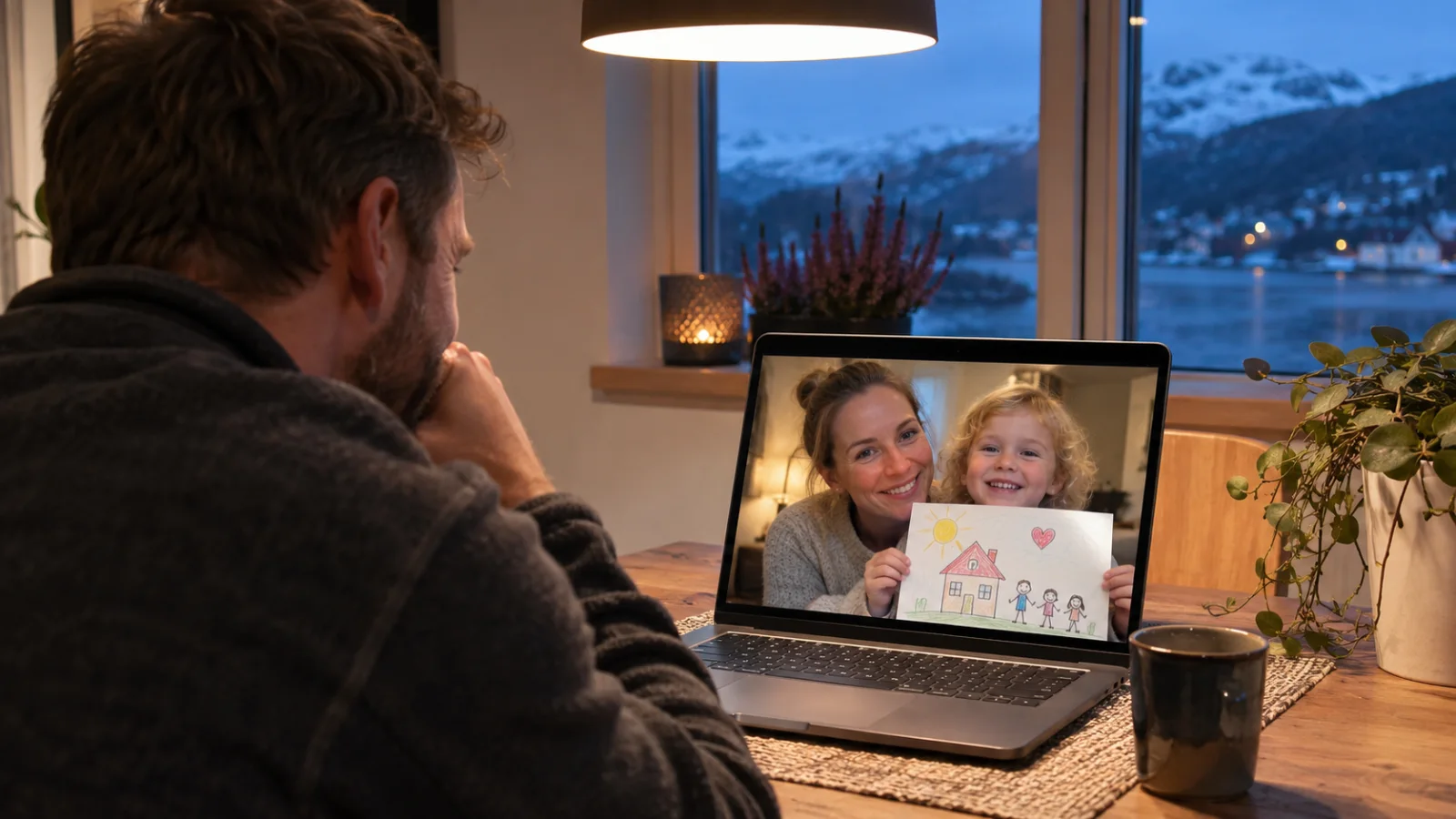
Behind a move to Norway there is often a concrete goal. We want to buy an apartment, pay off a loan, give our children a better start or finally stop worrying about whether the money will last until the end of the month. One can leave out of love for family. One can work hard, deny oneself many things and repeat every day: “I do this for them.”
The bank account shows how much has been saved. It is harder to notice the moment when we stopped talking about small things. When the child stopped asking whether dad will pick them up from school. Or when, after returning home, one of us wanted finally to be hugged, and the other mainly dreamed that someone else would take over the evening bedtime routine.
Two countries, two everyday lives, one marriage
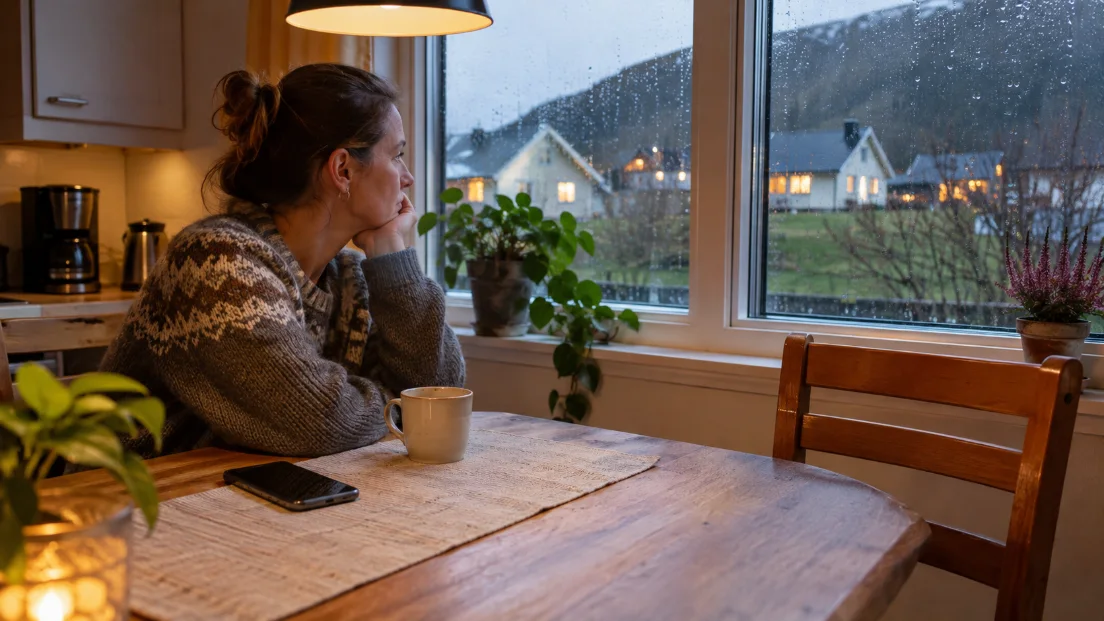
Take a family in which the husband works in Norway and the wife stays in Poland with the children. His day is defined by working hours and the time until the next trip home. After a shift he returns to an empty apartment. Sometimes what he misses most are the sounds he used to barely notice. The sound of someone bustling in the kitchen, children arguing about something, being able to sit down together for dinner.
Her day is defined by other matters. Shopping, lessons, a school meeting, a visit to the doctor. When a child gets a fever at night, she has to decide what to do. You also have to get up in the morning. Over time she gets used to making decisions on her own. And when the husband arrives, it can be difficult for her to hand over part of the responsibility, even though she has waited for it for so long.
He may think: “I work so they lack nothing. Does anyone see how much every trip costs me?”. She may think: “I have a family, and when something difficult happens, I have to manage on my own”. Both miss each other. Both can be tired. The thing is, each of them sees exactly the effort they personally make, while the other’s daily life is known mainly from short conversations.
It is easy then to start keeping score. Who has it harder? Who sacrifices more? Who has the right to rest after he arrives? At such a moment it is worth asking: “Which part of your day do I not see at all?” The answer can surprise even after many years of marriage.
When marriage begins to live mainly through the phone
The phone allows us to hear a loved one at the moment we need them. It allows us to see a child’s drawing, send a photo from work, wish each other good night. Yet there are things we miss despite daily video calls. A hug after a hard day. A spontaneous conversation when we pass each other in the kitchen. Shared silence that neither of us feels obliged to fill.
“Did the children do their homework?”, “Did you pay the bill?”, “When are you flying in?”. These questions are necessary. The problem arises when, after discussing all the matters, we end the call and only later think: “I wanted to tell him that I am having a hard time.”
We can talk for an hour about organizing life and not find five minutes to say: “I miss you”, “I feel lonely”, “I’m afraid we’re getting to know less and less about each other”. Sometimes it is worth starting the conversation precisely with what we usually leave to the end. Or returning to something the partner mentioned yesterday: “You said you were afraid of that meeting. How did it go?” In such a question you can hear that we remember each other even when the screen goes dark.
Wives of sailors. Were women ever stronger?
Many people remember sailors' wives who in the 1980s ran the household for months at a time in their husbands' absence. Some for nine months raised two or three children, worked, made decisions and waited for news. A letter had to be written, sent, and then one had to wait for a reply. You could not switch on a camera in the evening and spend even a moment together.
From the perspective of years it is easy to say: "Women used to manage." It is worth considering what people around them actually saw. They saw children walked to school, groceries bought, a home where everything worked. Who saw the woman's evening when after a whole day she wanted to tell someone how frightened she had been today or what she was proud of?
You can be resourceful and responsible and at the same time feel lonely, long for someone or be exhausted. The fact that a woman coped alone for many months says little about how she felt then. Perhaps the most important change we can introduce into our families today is creating a space for the ordinary sentence: "Today is hard for me. I need you to listen to me."
A child may miss someone, and after a parent's return pull away from a hug
In Poland children of parents who went abroad to work were sometimes labeled "eurosierot". One word, however, says little about the life of a particular child. Many children have stable, loving families on both sides of the border. Each also has their own way of experiencing separation.
An adult knows the reason for the trip. They know how much of the loan remains to be repaid and how many days until the return. A child looks at the same situation from a different perspective. "Why wasn't dad at my birthday?", "Why does another child's dad pick them up from school?", "Will he be there when I need him?". Even if they understand the answer, they can still feel sad.
Longing sometimes makes itself known in the evening. A child wants to sleep in dad's T-shirt, looks at photos, asks once again about the return date. Other times they get angry, fall silent or cling more tightly to the parent who is there. What they are experiencing is best learned through conversation and careful observation. The behavior itself can have many causes.
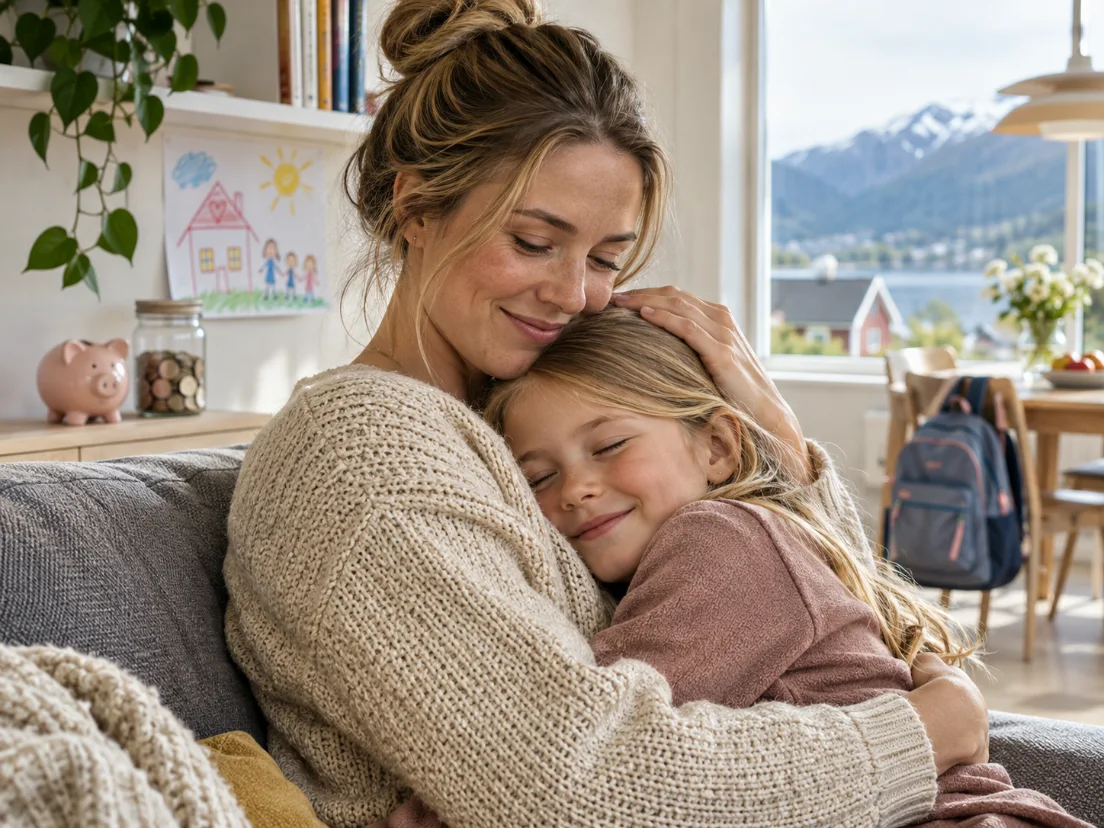
The moment of greeting can be particularly difficult. The parent counted the days, imagined the hug already at the door. Meanwhile the child hides behind their mother or goes back to play. They may love, miss and feel resentment at the same time. Instead of saying: "Come on, you were waiting for me," you can sit next to them and say: "I'm glad to see you. Can I sit here with you?". That is also a greeting. It gives the child time to make the next move themselves.
Can you be a good parent from a distance?
You can. Ordinary things that the child recognizes as their own matter a great deal. On Wednesday they had a math test. On Friday a classmate was supposed to come home for the first time. For several days they have been trying to draw a horse and are upset that it keeps looking like a dog. When the parent returns to this in the next conversation, the child learns something important: dad or mom remembers my world even after the conversation ends.
Such contact helps when the child can actually rely on it. For one family it will be reading together at bedtime. For another a short voice message listened to in the morning because the evening work shift happens to fall at bedtime. It is worth choosing something that can be repeated. And when a scheduled conversation is missed, reach out, explain what happened, and keep the next appointment.
It is also worth asking the parent remaining in Poland which part of the responsibility can be taken over from Norway. Maybe it concerns following school messages, arranging appointments or regularly helping the child with their studies. It already makes a difference that one matter belongs to the other parent from start to finish. The person who is on site can then actually breathe out.
When we live together again, will we be able to be close?
After years of departures, both may be waiting for the same day and imagining it completely differently. The returning person dreams of finally feeling at home. The person who stayed has already developed a daily rhythm. Children also have their habits. Even such a small matter as who makes breakfast in the morning or puts the child to bed can become a source of tension.
Return can be beautiful. It can also be a period of relearning each other. During the time apart we have both changed. It is worth giving yourselves space to rebuild tenderness, to redivide duties and to determine what we want to decide together again. Sometimes such a conversation is easier to start before the trip: "What are you most looking forward to after my return? What are you afraid of?".
There is also a conversation that is easy to postpone from one trip to the next. How do we want to live as a family in a year, in three years, in five years? Do we both still want the same thing? How will we know that we have achieved the purpose of the trip? When will we return to this decision if one of us finds it increasingly difficult?
Children are growing up now
It is easy to promise ourselves more time together when we have paid off the mortgage, bought an apartment, returned to Poland or the children are older. Meanwhile the test is on Wednesday. A difficult conversation at work happened today. Today a close person wanted to tell us something and for a moment wondered whether we still had the strength to listen.
You can work in Norway, love your family in Poland and take part in its life. Sometimes the beginning is one question asked of a partner, sometimes a phone call to a child about a matter that seems unimportant to anyone else. And sometimes an honest answer to yourself to the question: "Am I so busy building a better future for my family that I am no longer present in its present?"
Bibliography and sources.
Beck, U., and Beck-Gernsheim, E. (2013). Love at a Distance. Life Models in the Global Age. Trans. M. Sutowski. Wydawnictwo Naukowe PWN. katalogi.oborniki.pbp.poznan.pl
Bowlby, J. (1982). Attachment and Loss. Vol. 1: Attachment (2nd ed.). Basic Books. Edition description. books.google.com
Gagat-Matuła, A., and Smalej, O. (2014). Communication in marriages experiencing migratory separation. In: J. Nikitorowicz, J. Muszyńska and B. Boćwińska-Kiluk (eds.), From the multiculturality of place to the interculturality of social relations. Contemporary strategies for creating the spaces of individual life (pp. 199–210). Academic Publisher Żak. Full text on the University of Białystok website. noe.uwb.edu.pl
Kozak, S. (2010). The pathology of euro-orphanhood in Poland. Effects of labor migration for children and their families. Difin. Description and table of contents in the Academic Digital Library. Academic Digital Library
Parreñas, R. S. (2005). Children of Global Migration: Transnational Families and Gendered Woes. Stanford University Press. Book description. books.google.com
Walsh, F. (2016). Strengthening Family Resilience (3rd ed.). Guilford Press. Publisher's page. Froma W
Zajęcka, B. (2023). Marriage at a distance in the opinions of married women and married men. Family Education, 30(3), 125–144. DOI and access to the publication.