“I'm learning Norwegian.” But to what level?
This question sounds trivial.
It is not.
You can live in Norway for ten years and understand colleagues at work, and at the same time have trouble writing:
a complaint,
an application,
a message to the school,
an appeal to NAV.
You may also read very well, but freeze when you need to call the doctor.
That is why Norwegian does not work like a game:
"I have level B1 and everything is B1."
Each skill can develop differently.
And precisely for that reason the official Norskprøve assesses them separately.
A1 - I begin to function
At A1 you can manage very basic situations.
You understand simple:
greetings,
numbers,
times,
prices,
short questions.
You can say:
who you are,
where you live,
where you work,
what you need.
But the person you are talking to often has to speak:
slowly,
clearly,
in simple sentences.
HK-dir describes A1 as a level that allows using familiar everyday expressions and participating in very simple communicative situations.
This is the beginning.
Not the final goal.
A2 - you begin to actually live in Norwegian
At A2 communication stops being just a set of learned sentences.
You can:
do the shopping,
make an appointment,
talk about simple tasks at work,
briefly describe what happened,
write a simple message.
You understand clear and simple language concerning familiar situations.
In practice A2 already provides much greater independence.
But in a more complicated conversation you can still quickly lose the thread.
A2 also has legal significance - but not for everyone
From 1 September 2025, in the ordinary permanent oppholdstillatelse procedure, the standard requirement of passing an oral Norwegian test at least at A2 level and a test of knowledge about society is applied, unless an exception applies.
But note:
this is not the same procedure as varig oppholdsrett of an EU/EEA citizen.
If you are a Pole using the EEA system, read:
Permanent residence in Norway for an EU citizen: varig oppholdsrett after 5 years
/internal link to today's P1/
Do not mix these two procedures.
B1 - the point where the language begins to give freedom
B1 is the most important practical goal for many people.
At this level you should already be able to:
have a normal conversation,
talk about experiences,
explain a problem,
understand a fairly simple professional conversation,
talk about work, family and everyday life,
express your own opinion.
HK-dir describes B1 as a level where a person can understand relatively simple language and express themselves in an understandable and coherent way about work, school, leisure time or familiar social topics.
This is not:
"I speak like a Norwegian."
But very often it is already:
"I can take care of my own affairs."
B1 and Norwegian citizenship
Here a very clear threshold appears.
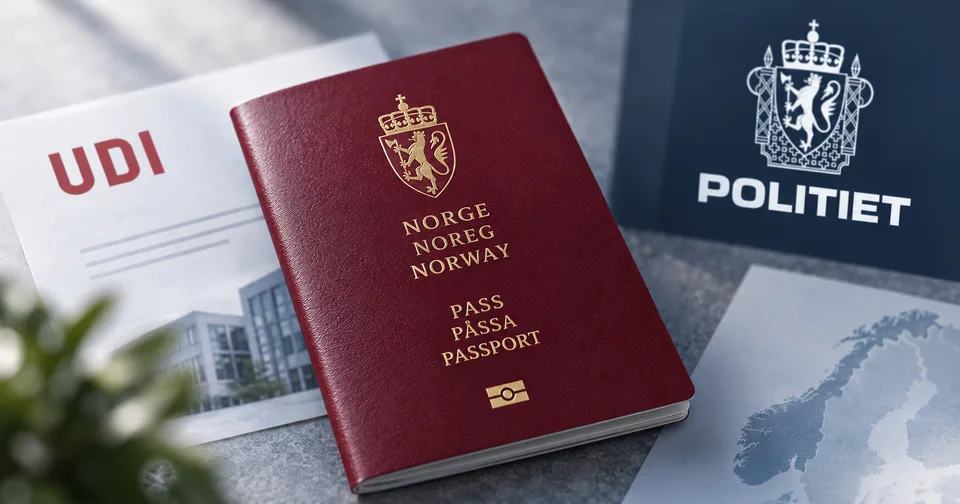
UDI indicates that for a person aged 18-67 years applying for Norwegian citizenship the standard language requirement is a passed exam in oral Norwegian at B1 level or higher.
In addition, you must meet the requirement concerning:
statsborgerprøven
or the appropriate test of social studies knowledge in Norwegian.
There are exceptions for certain groups, but you should not assume they apply to everyone.
Therefore, if you plan to pursue citizenship in the future:
B1 speaking is a very sensible first major goal.
B2 - you start to function comfortably
B2 is a completely different level of comfort.
At this level you can already function linguistically in much more demanding situations.
You read:
more complex texts,
instructions,
documents,
articles.
You can:
argue,
explain,
compare,
defend your position,
conduct more demanding professional conversations.
For many professions, B2 may be far more valuable than the "official minimum".
Because an authority may require B1 speaking.
But an employer may need someone who can:
talk with a client,
write a report,
read procedures,
understand health and safety training,
lead a meeting.
That's a different bar altogether.
C1 - a very high level
C1 is not simply:
'a slightly better B2'.
HK-dir describes Norskprøve C1 as an exam at a higher academic level.
It is the most difficult of the Norskprøvene.
On the C1 exam you do not receive a result of:
A2,
B1,
B2.
The result is:
C1
or:
not passed.
HK-dir also emphasizes that for most professions a C1 requirement would be disproportionately high.
It's a level for situations where you need very precise and advanced language.
You do not have to have the same level in everything
This is one of the most important pieces of information in this guide.
Imagine:
Listening
B2
Reading
B2
Speaking
B1
Writing
A2
That's possible.
Norskprøve A1-B2 consists of four independent parts:
listening comprehension,
reading comprehension,
written production,
oral communication.
Each is assessed separately.
Therefore do not ask only:
'What level of Norwegian do I have?'
Ask:
'How well do I understand when listening?'
'How well do I speak?'
'How well do I write?'
'How well do I read?'
That's much more useful.
What does Norskprøve A1-B2 look like?
HK-dir currently lists four parts.
Listening
listening comprehension
about:
30-60 minutes
Reading
reading comprehension
about:
75 minutes
Writing
written production
about:
90 minutes for A1-A2 and A2-B1,
and:
120 minutes for B1-B2.
Speaking
oral communication
about:
20-25 minutes.
Listening, reading and writing take place on a computer.
Which exam should you register for?
For writing and speaking you choose the range:
A1-A2
A2-B1
or:
B1–B2.
However, the listening and reading tests are partially adaptive.
You do not simply register there for:
"B1 in reading".
The system adapts the difficulty of tasks to the candidate's results.
That also means you should not choose B1-B2 just because:
"it looks better".
If your real level is A2, the B1-B2 exam may simply be too difficult.
Does Norskprøve test grammar?
Not in the way a school test does:
"insert the correct ending".
HK-dir emphasizes that Norskprøve is a test of communicative competence.
There is no single "curriculum to learn".
The test is meant to check:
whether you can use the language.
Of course grammar affects the result.
But you can know 300 grammar rules and still not be able to carry out a conversation.
Where can you take Norskprøve?
At examination locations in Norway.
HK-dir clearly states:
Norskprøve cannot be taken abroad.
Most municipalities organize A1-B2 exams:
four times a year.
But not every centre offers every session.
Therefore do not plan:
"I'll come to Oslo on that day".
First check the specific test centre.
Dates — situation as of 11 November 2026
The next Norskprøve A1-B2 will take place:
30 November - 4 December 2026.
Registration for this session took place:
26-30 October 2026, so as of the publication date it had already closed.
Next session:
Spring 2027
Registration:
25 - 29 January 2027
Exam:
8 - 12 March 2027
Results:
6 April 2027.
Always double-check the dates before signing up.
HK-dir - current Norskprøve dates
And C1?
The C1 exam takes place less often.
HK-dir basically organizes it:
twice a year.
The next session at the time of publication:
7 - 8 December 2026.
Registration was:
26 - 30 October.
The next planned session is summer 2027.
How much does Norskprøve cost?
There is no single nationwide price.
The price is set by the municipality / test centre.
HK-dir states approximately that the price may start from around:
400 NOK or more for one part
and in some places reach about:
2500 NOK for the whole exam.
You will see the exact price during registration or you will receive it at your test centre.
If you have the right and duty to an appropriate Norwegian language learning program, you may be entitled to one free attempt at all parts of Norskprøve.
Is a Norwegian course free?
You need to be careful here.
Online you will often read:
"in Norway every immigrant has a free Norwegian course".
That is not true.
The right to free education depends, among other things, on:
the basis of residence,
age,
which regulations you are subject to,
your individual situation.
IMDi confirms that some immigrants have:
rett og plikt
meaning the right and duty to study,
while others must pay for the course.
Therefore, the first place worth checking is:
voksenopplæring in your municipality.
I'm Polish. Will the municipality give me a free course?
Don't assume that automatically.
The mere fact:
“I am an EU/EEA citizen”
does not automatically mean that you belong to the group that has a statutory right to free education under the Integration Act.
The most practical rule of thumb:
ask the voksenopplæring in the municipality, present your residence status and request an assessment of your right to the course.
IMDi emphasizes that it is the municipality that is responsible for decisions regarding education under the Integration Act.
Do not immediately buy a private course for tens of thousands of kroner before you check local options.
Where to look for a course?
1. Voksenopplæring in the municipality
Type:
[municipality name] voksenopplæring norsk
and check:
courses,
levels,
prices,
dates,
evening courses,
online courses.
This is the best first place to start.
2. Approved providers
HK-dir maintains an official list of approved entities providing Norwegian and social studies education.
On the list are:
municipal adult education centres,
county-level centres,
approved private schools.
The list was updated on 21 October 2026.
HK-dir - approved course providers
A paid course does not have to mean a better course
You can spend:
a few,
several,
or even tens of thousands of kroner
and still not learn to speak.
Why?
Because you cannot "buy" the language.
You can buy:
teacher,
structure,
materials,
correction,
regularity.
But someone still has to:
use the language.
Therefore, when choosing a course, check:
group size,
how much you will actually speak,
whether the course prepares you for your level,
whether you receive feedback on writing,
whether the teacher corrects pronunciation,
how many classes per week,
whether the course prepares for a specific Norskprøve.
Free Norwegian also exists outside of school
Don't have money for a course?
That does not mean:
“I can't learn”.
The official portal Ny i Norge points to, among others:
language training in libraries,
språkkafé,
free conversation groups,
online resources for self-study.
One of the free resources is:
LearnNoW
which takes you from the basics to around A2.
There is also LearnNoW2 concerning language in healthcare at about B1 level.
The library may be more important than another app
Check your local library.
In many places the following takes place:
språkkafé.
This is usually not a formal course.
And that is exactly why it can work great.
You're not sitting over:
"verbs and preterite".
You must:
say what you did at the weekend,
talk about work,
ask about something,
respond to another person.
So you do exactly what people learning with an app most lack:
you speak.
Don't learn only "Norwegian from an app"
An app is great for:
vocabulary,
reviewing,
short exercises.
But real language is:
an employer speaking quickly,
a phone call from the kindergarten,
a doctor with a dialect,
a colleague cutting off half a sentence,
NAV using official terms.
Therefore you need at least four things:
listening
reading
writing
speaking
Exactly the same four areas that Norskprøve measures.
Dialects — that is, "I learned Norwegian, but I understand nothing"
This is a normal stage.
In class you hear:
I have not seen him.
At work you might hear something that sounds completely different.
Norway has a huge variety of dialects.
That does not mean you learned "bad Norwegian".
It means:
you need to start listening to the real language of the region where you live.
Radio.
Podcast.
Colleagues.
Local news.
Conversations.
Don't avoid the dialect.
Get used to it.
Bokmål or nynorsk?
For most adult immigrants starting to learn, a practical starting point will be:
bokmål.
It is one of the two official written forms of Norwegian.
The other is:
nynorsk.
They are not two different spoken languages.
People speak dialects.
Bokmål and nynorsk are primarily about written language.
Don't postpone learning for a month trying to decide:
"which Norwegian should I learn?"
Start with the system used in the course and in your surroundings.
How long does it take to reach B1?
There is no honest answer:
"6 months".
Someone:
lives with Norwegians,
works in Norwegian 8 hours a day,
studies an hour in the evening
and develops very quickly.
Another person:
works only with Poles,
watches Polish television,
speaks Polish at home,
uses the app 10 minutes a day.
After three years they may still have a problem with a phone conversation.
Don't count only:
months of study.
Count:
hours of real contact with the language.
The "B1" goal is too big. Break it down
Instead of:
"I must learn Norwegian to B1"
set:
Goal 1
I arrange a doctor's appointment myself.
Goal 2
I understand a meeting at work.
Goal 3
I write a message to the school without a translator.
Goal 4
I can talk about my professional experience.
Goal 5
I complete a practice B1 test.
These are goals you can achieve.
How to prepare for Norskprøve?
Speaking
Don't practice only:
"My name is..."
At higher levels you need the skills to:
express opinions,
justify,
compare,
conduct a conversation.
Writing
Write regularly.
Don't write a single essay the day before the exam.
Better:
3 short texts per week.
Reading
Don't read just the textbook.
Read:
news,
official websites,
announcements,
emails,
information from work.
Listening
Listen to different voices.
Not just one teacher speaking perfect bokmål.
The exam should not be your first contact with the exam format.
HK-dir publishes preparatory materials and information about the structure of Norskprøve.
HK-dir - information about Norskprøve A1–B2
Before the exam check:
task types,
time,
how to answer,
the level you are registering for.
Familiarity with the format will not teach you the language.
But it will help you avoid losing points because you see a task type for the first time.
A Polish accent does not mean that "you don't know Norwegian"
The goal is not:
to sound like someone born in Bergen.
The goal is:
to be understandable,
to understand others,
to communicate effectively.
An accent in itself is not a failure.
The problem starts when pronunciation causes the interlocutor to:
not understand key words.
Therefore work on your pronunciation.
But don't wait to speak until it is perfect.
Language at work can be more important than a certificate
You can have B2 on paper and still not know:
names of tools,
procedures,
industry abbreviations,
words related to safety.
Therefore after reaching a basic level, learn the language of your industry.
A construction worker needs different words than:
a nurse,
an accountant,
a driver,
a programmer,
a teacher.
Can an employer require Norwegian?
In many professions language is part of real safety and performing the job.
HK-dir emphasizes that employers should match the required level to the actual duties.
Not every profession requires:
C1.
And not every role can be performed without any Norwegian.
It's worth looking separately at:
speaking,
understanding,
reading,
writing.
Norskprøve is not the end of learning
You pass B1.
Great.
But the day after the exam, your Norwegian doesn't stop developing.
B1 can open doors.
B2 can make you really start using what is behind those doors.
And even more important:
language allows you to independently understand:
an employment contract,
a message from the school,
information from NAV,
a decision from an authority,
a conversation with a doctor.
This is the real value of the language.
I have lived in Norway for 10 years and I still speak poorly. Is it too late?
No.
But you probably need to change your way of learning.
If for ten years you:
work in Polish,
talk in Polish,
watch in Polish,
get things done through someone else,
then merely living in Norway will not automatically teach you the language.
Do an experiment.
For 30 days:
20 minutes of listening every day,
10 minutes of speaking every day,
3 short texts per week,
1 conversation without switching to English or Polish,
1 hour of structured study several times a week.
After a month you will see a difference.
Where to start today?
If you are at level 0–A1
Goal:
survive the first conversation.
Learn:
numbers,
hours,
questions,
everyday verbs,
words related to work and housing.
If you are at A2
Goal:
independence.
Start speaking more.
Write short messages.
Limit using a translator for every sentence.
If you are at B1
Goal:
fluency.
Listen to normal speech.
Read Norwegian media.
Argue.
Write longer texts.
If you are at B2
Goal:
precision.
Develop professional vocabulary.
Improve style.
Practice more complicated conversations.
If you are aiming for C1
You already need very advanced language.
This should not be:
“one more vocabulary app”.
You need regular contact with complex spoken and written language.
The best method? Combine four things
1. Structure
A course or an organized program.
2. Everyday life
Norwegian used for real.
3. Speaking
Not just understanding.
4. Correction
Someone or a system must tell you:
“you've been making this same mistake for six months.”
Exposure alone is not always enough.
Our plan for a person who wants to stay in Norway
If your goal is to live here permanently:
Step 1
Check your real level.
Step 2
Set a concrete goal.
Not:
“Norwegian”.
Only:
B1 orally
or:
B2 at work.
Step 3
Check the adult education (voksenopplæring) in your municipality.
Step 4
If you do not have the right to a free course, compare:
municipal course,
an approved private provider,
online course,
self-study + conversations.
Step 5
Join free practice:
library,
language café,
conversations.
Step 6
If you need a certificate, plan the Norskprøve sufficiently early.
Step 7
After passing the exam, don't stop speaking.
If you are planning citizenship
Don't leave the language until the very end.
If you know:
“in a few years I want citizenship”
then starting to learn only a month before the application is a terrible plan.
UDI normally requires B1 orally for most applicants aged 18–67.
Therefore:
start earlier.
In the path “I want to stay in Norway permanently” the logical order looks like this:
permanent residence permit,
learning Norwegian,
Norskprøve,
citizenship,
housing and long-term finances,
retirement.
Language is not an add-on.
It is a tool for everything that comes later.
OFFICIAL SOURCES
HK-dir — Norskprøve A1–B2
Structure of the exam, levels and the four independent parts.
HK-dir - levels A1–C1
Description of what the individual language levels mean.
HK-dir - what the Norskprøve levels mean
HK-dir - exam dates
Current registration and exam periods.
HK-dir - approved course organizers
Current list of approved public and private providers.
IMDi - learning Norwegian and social studies
Rules regarding the right and obligation to learn.
IMDi - Norwegian and social studies
UDI - language requirements for citizenship
The standard requirement is B1 orally and the appropriate social studies test.