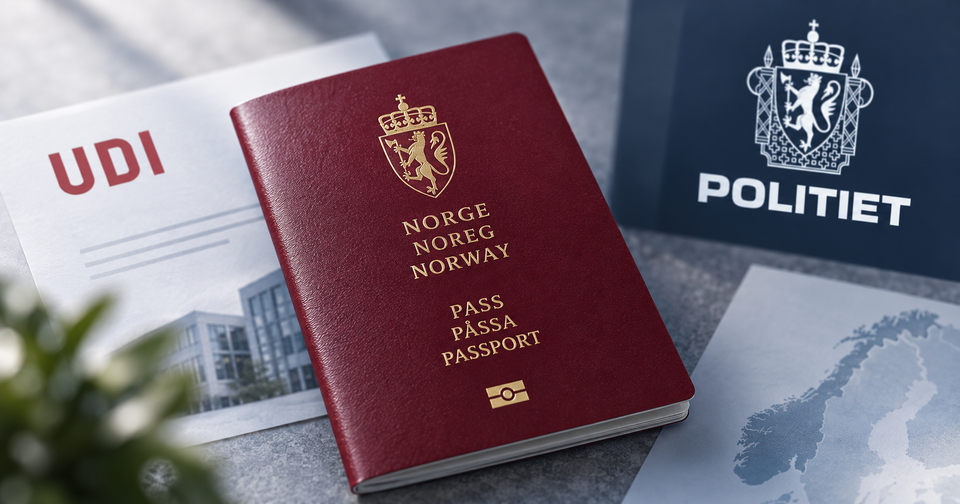
Are you from Poland? In Norway you are an EU/EEA citizen
If you have Polish citizenship, you do not need an ordinary work permit just because you are moving to Norway.
You can arrive and start working immediately. UDI confirms that EU/EEA citizens have the right to take up work in Norway, and if they intend to live here for longer than 3 months, they must register. Registration is free of charge.
However, that does not mean that you have no formalities after crossing the border.
This is exactly where many people get confused.
If you have 30 seconds, check this
Determine on what basis you are staying in Norway for more than 3 months.
If you work, register as an EU/EEA worker.
Book an appointment with the Police or SUA.
Prepare an identity document and a document confirming your employment.
Obtain a skattekort and a Norwegian identification number.
If you stay for more than 6 months, report your move to Folkeregisteret.
Keep documents that prove you still have the right of residence.
Now step by step.
Step 1. First check why you can stay in Norway longer
Simply having EU/EEA citizenship does not mean you can live in Norway without any conditions for an unlimited period.
If you are staying longer than 3 months, you must rely on a right of residence under one of the grounds provided in the EU/EEA rules.
You can, for example, be:
a worker,
a self-employed person,
a posted worker or service provider,
a student,
a person supporting themselves with their own means,
a family member of a person exercising the right of residence.
UDI explains that for stays over 3 months an EU/EEA citizen must have a basis for the right of residence and must register.
First check with UDI which situation applies to you:
UDI: rules of residence for EU/EEA citizens in Norway
If you came for a specific job, let's continue.
Step 2. Do you have a job? You can start working immediately
This is one of the most important differences between an EU/EEA citizen and a third-country national.
An EU/EEA citizen can move to Norway and start working without waiting for an ordinary work permit. UDI states that the worker must register no later than 3 months after arrival.
Check the rules precisely for an EU/EEA worker:
UDI: employee who is an EU/EEA national
So do not delay starting legal work just because the police appointment date is later.
SUA explains that even with a long waiting time for an appointment an EU/EEA citizen can still have a legal right of residence if they actually meet its conditions, for example if they work in Norway.
Step 3. Register in the EU/EEA system
If you will live and work in Norway for more than 3 months, you must register.
Worker registration works in practice as follows:
You fill out the registration according to the UDI procedure.
You book an appointment with the police.
You come in person with the required documents.
After meeting the conditions you receive a registration certificate.
Your employer can help you prepare the form or schedule the appointment, but you must appear in person for the registration.
Here you will start the procedure and book the appointment:
UDI: EU/EEA worker registration
If an SUA operates in your region, you can also have the police appointment there.
Check the appointment at SUA:
SUA: book an appointment as an EU/EEA citizen
Step 4. Prepare documents before the appointment
Don’t go to the appointment “to see what they will want”.
For an EU/EEA worker the basis is a document confirming your identity and the fact that you are actually working.
Your employer should prepare an employment contract or appropriate confirmation of employment. UDI indicates that the worker presents such a document at registration.
In practice, prepare above all:
a valid passport or national ID card,
an employment contract or the required confirmation of employment,
additional documents specified by UDI for your situation.
Before the appointment check the current UDI checklist, not an old list from the internet:
UDI: current requirements for EU/EEA workers
This is important because documents depend on the basis of residence. A student, a worker and a self-employed person do not have to prove exactly the same things.
Step 5. The registration certificate does not grant you the right of residence
It sounds strange, but it is worth understanding.
After correct registration the police issue a registration certificate, that is a certificate confirming that you have been registered as an EU/EEA citizen.
But UDI makes it very clear that the certificate itself is not a document confirming the right of residence.
The right of residence results from the fact that you actually meet the conditions, for example you work, study or run a business.
Therefore keep:
employment contracts,
payslips,
documents related to studies,
business documents,
other evidence showing on what basis you are staying in Norway.
Read UDI's explanation about the certificate:
UDI: what is the registration certificate
Step 6. You register only once
The good news is that you do not have to go to the police every time you change jobs.
UDI states that an EU/EEA citizen registers only once. You can later, for example, move from studies to work or change employer without re-registering.
But there is one condition.
Throughout your stay you must still belong to one of the categories that grant the right to residence.
So it's not just about the document you received a few years ago. Your actual situation matters.
Step 7. You need a skattekort and an identification number
EU/EEA registration and taxes are two separate matters.
If you work in Norway, you need a skattekort. Most foreign workers also need a Norwegian identification number, i.e. a D-nummer or a fødselsnummer.
If you do not yet have a Norwegian identification number, an identity check may be required for the first skattekort.
You can find the application for a skattekort here:
Skatteetaten: skattekort for foreign workers
SUA states that for an appointment related to skattekort an EU/EEA worker should bring, among other things, a passport or national ID card and an employment contract or a written job offer.
If you want to handle this at SUA, check the documents carefully here:
SUA: skattekort and formalities for EU/EEA citizens
We will cover the issue of the identification number separately:
Next guide: D-number or fødselsnummer, what is the difference and which number will you get?
Step 8. Staying more than 6 months? Report your move
Here another deadline appears and often another misunderstanding.
EU/EEA registration with the police and reporting a move to Folkeregisteret are two different matters.
If you intend to live in Norway for more than 6 months, Skatteetaten points out the obligation to report the move.
Here you can check the procedure for reporting a move:
Skatteetaten: moving to Norway and Folkeregisteret
SUA also provides a specific list of documents. When reporting a move, the following may be required:
passport or national ID card,
the move notification form,
documents showing the right of residence for at least 6 months,
a document confirming that you will actually live in Norway for that period.
This may be, for example, a rental agreement, a purchase agreement for an apartment, an employment contract or a document from a school or university.
Check the current list before your appointment:
SUA: documents for reporting a move
And what if you are still looking for a job?
This is a different situation than arriving with a job already arranged.
As an EU/EEA citizen you can come to Norway to look for work and stay here for up to 6 months.
However, you must register with the police as a job seeker no later than 3 months after arrival. If after 6 months you still do not have a job, UDI indicates that you must leave Norway.
Here you will find the correct procedure for a person looking for work:
UDI: EU/EEA national looking for work in Norway
When you find a job, you should proceed to register as an EU/EEA worker.
Important exception: citizens of the Nordic countries
Sweden, Denmark, Finland and Iceland are part of the same broad free movement area, but their citizens have special rules.
UDI points out that a citizen of a Nordic country does not have to carry out the standard EU/EEA registration at the police. When moving to Norway, they should instead report the move to the Folkeregisteret.
So if you are Polish, this exception does not apply to you.
Coming with family? Check each person's citizenship
Do not assume that the whole family goes through exactly the same procedure.
If a member of your family is also an EU/EEA citizen, they may use the EU/EEA registration system.
If a family member is a citizen of a country outside the EU/EEA and intends to live in Norway for more than 3 months, UDI indicates that a residence card as a family member of an EU/EEA citizen may be required.
Check your family's situation directly with UDI:
UDI: answers regarding EU/EEA residence and family members
Most common mistakes
"I'm from Poland, so I don't have to register"
You can start work immediately, but for stays longer than 3 months registration is required and you must still meet the conditions of the right of residence.
"I don't have a police appointment yet, so the employer can't hire me"
The mere absence of completed registration does not mean that an EU/EEA citizen cannot start work. UDI confirms the right of EU/EEA citizens to work in Norway.
"I have a registration certificate, so I have the right to stay forever"
No.
The certificate confirms registration. It is not by itself proof of a current right of residence.
"I have a skattekort, so EU/EEA registration is sorted"
No.
Skattekort concerns taxes. EU/EEA registration concerns residence. Folkeregisteret concerns registration as a resident.
These are three different matters.
"I reported my move to the Folkeregisteret, so I don't have to do anything with UDI or the Police"
These are also separate procedures.
In practice, you can handle several matters during a visit to the SUA, but they are still separate registers and decisions.
What should you have after sorting out the first formalities?
Depending on the situation you may have:
a valid basis for EU/EEA right of residence,
completed registration with the police,
registration certificate,
Norwegian identification number,
skattekort,
for longer stays, a reported move to the Folkeregisteret.
Not everyone will receive all of these elements on the same day.
And not everyone will need exactly the same set.
What to do now?
If you have already checked your EU/EEA situation, the next question is:
D-nummer or fødselsnummer?
It is this identification number that later starts to connect many Norwegian systems: taxes, banking, administration and digital services.
Next guide: D-nummer or fødselsnummer, what is the difference and which number will you get?
Official sources
UDI: worker who is an EU/EEA citizen
Rules for starting work, registration, the rights and obligations of the worker and the 3-month deadline.
UDI: answers regarding EU/EEA residence rights
Explanation of the basics of residence rights, registration, family and documenting the right of residence.
UDI: registration certificate
Explanation of what a registration certificate is and why it alone does not confirm the right of residence.
UDI: EU/EEA citizen looking for work
Rules for a 6-month stay to look for work and the obligation to report to the police after 3 months.
SUA: visit for an EU/EEA citizen
Documents needed for registration, skattekort and reporting a move.
Skatteetaten: moving to Norway
Rules for reporting a move when staying longer than 6 months.
Skatteetaten: skattekort for foreign workers
Application for a tax card, identity check and identification number.
Information verified: 19.09.2026